|
|
|||
|
||||
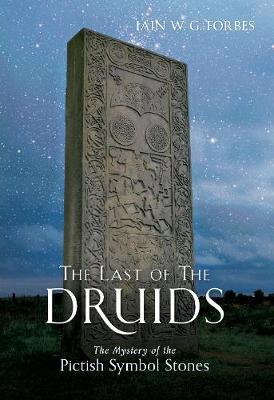
OverviewThe Picts, who inhabited Scotland in the first millennium AD, remain one of Europe's most enigmatic peoples. Although leaving little in the way of written records, they did however leave a legacy of literally hundreds of magnificent carved stone monuments. The vast majority of these are adorned with strange scenes and seemingly impenetrable symbols. The purpose and meaning of these strange hieroglyphic-like symbols have baffled archaeologists and historians for nearly two hundred years. Using a combination of astronomical software to simulate the Pictish night sky and by delving into the astronomical significance of European mythology, the author demonstrates that scenes depicted on two prominent monuments are actually celestial calendars. A revolutionary new theory is presented that suggests that Pictish druids were practiced astronomers. It is argued that the previously impenetrable pictographs can therefore be explained as forming a complex set of astrological symbols, which, in combination, indicate whether the celestial portents on a particular day were auspicious or inauspicious. The implications of this new theory with regard to our understanding both of the Picts and also the origins of astronomy and astrology in Europe and Asia are explored. Full Product DetailsAuthor: Iain W. G. ForbesPublisher: Amberley Publishing Imprint: Amberley Publishing ISBN: 9781445602301ISBN 10: 144560230 Pages: 192 Publication Date: 28 June 2012 Audience: General/trade , General Format: Paperback Publisher's Status: Active Availability: In stock We have confirmation that this item is in stock with the supplier. It will be ordered in for you and dispatched immediately. Table of ContentsReviewsAuthor InformationTab Content 6Author Website:Countries AvailableAll regions |
||||