|
|
|||
|
||||
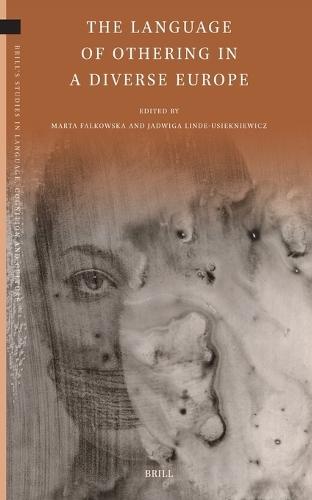
OverviewThis book explores how language is used to create division and discrimination in diverse European societies by emphasizing differences in ethnicity, race, national identity, beliefs, or appearance. The authors analyze how public discourse—particularly in political and media narratives—shapes and reinforces an “us vs. them” mindset. They examine words and expressions that denigrate or marginalize specific groups in Polish, German, Czech, Slovak, and Croatian, and observe how certain communities are also reclaiming terms that were once hurtful. The analyses of linguistic strategies employed in the process of othering demonstrate that the concept of othering can be effectively applied to linguistic data. Contributors are: Dagmara Banasiak, Marta Chojnacka-Kuraś, Marta Falkowska, Jadranka Gvozdanović, Milena Hebal-Jezierska, Agnieszka Karlińska, Anna Kołos, Marie Kopřivová, Marek Łaziński, Jadwiga Linde-Usiekniewicz, Agnieszka Mikołajczuk, Iva Petrak, Jiří Rejzek, Lucie Saicová Římalová, Łukasz Wnuk, and Magdalena Zawisławska. Full Product DetailsAuthor: Marta Falkowska , Jadwiga Linde-UsiekniewiczPublisher: Brill Imprint: Brill Volume: 44 Dimensions: Width: 15.50cm , Height: 1.90cm , Length: 23.50cm Weight: 0.739kg ISBN: 9789004739116ISBN 10: 9004739114 Pages: 368 Publication Date: 21 August 2025 Audience: College/higher education , Professional and scholarly , Postgraduate, Research & Scholarly , Professional & Vocational Format: Hardback Publisher's Status: Active Availability: Manufactured on demand We will order this item for you from a manufactured on demand supplier. Table of ContentsList of Figures and Tables Notes on Contributors Othering and Language: An Introduction Marta Falkowska and Jadwiga Linde-Usiekniewicz Part 1 Naming for Othering in a Diachronic Perspective 1 Othering Construed and Maintained in Discourse Jadranka Gvozdanović 2 We are my ‘us’ and They are migranti ‘migrants’, emigranti ‘emigrants’, přistěhovalci ‘immigrants’, uprchlíci ‘refugees’, and Others Othering in the Context of Migration in Czech Lucie Saicová Římalová, Marie Kopřivová, and Jiří Rejzek Part 2 Naming for Othering in an Identity Debate 3 Naming the Other in Croatian Purist Discourse: A Study of Croatian Online Forum Debates Iva Petrak 4 Polish Neologisms cebulak ‘onioner’ and fajnopolak ‘cool-o-Pole’ as Signs of Othering within the Polish National Community Dagmara Banasiak and Łukasz Wnuk Part 3 Naming for Othering as a Strategy of Stigmatization 5 Ethnic Names in Translation as a Measure of Their Stigmatizing Potential in the Target Language A Parallel Corpus Study Marek Łaziński 6 Teachers (on Strike) as “the Others” in Polish Media Discourse Contempt Speech against Teachers in Media Articles and Accompanying Comments (Results of a Pilot Study) Agnieszka Mikołajczuk 7 Linguistic Strategies of Ethnic Othering and Exclusion on the Polish Social Networking Service Wykop.pl Anna Kołos and Agnieszka Karlińska 8 Troubled Neighborhood: Ethnophaulisms Referring to Ukrainian People in Contemporary Polish Marta Falkowska Part 4 Naming for In-group Purposes 9 Marking a Difference vs. Naming for Othering: Marginalized Groups’ Terms for Dominant Majorities The Case of Polish Deaf Writing about the Hearing Jadwiga Linde-Usiekniewicz 10 I’m not Obese, I’m Fat! Reclamation of Words as a Strategy for Building Group Identity in the Polish Fat People Discourse Magdalena Zawisławska and Marta Chojnacka-Kuraś 11 Naming the Sides of the Israel–Hamas Conflict in Czech, Slovak, and Polish Texts Milena Hebal-Jezierska Afterword Jadwiga Linde-Usiekniewicz and Marta Falkowska IndexReviewsAuthor InformationMarta Falkowska is an assistant professor of linguistics at the University of Warsaw. Her research focuses mainly on lexical semantics and cognitive grammar. She coordinated the SEED4EU+ project “Naming for Othering in a Diversified Europe”. Her forthcoming monograph deals with the concept of EMPATHY in Polish. Jadwiga Linde-Usiekniewiczis a professor of linguistics at the University of Warsaw. Lately, her research has focused largely on hate speech phenomena and non-discriminatory (inclusive) language, as well as sign language lexicology and lexicography. Tab Content 6Author Website:Countries AvailableAll regions |
||||