Overview
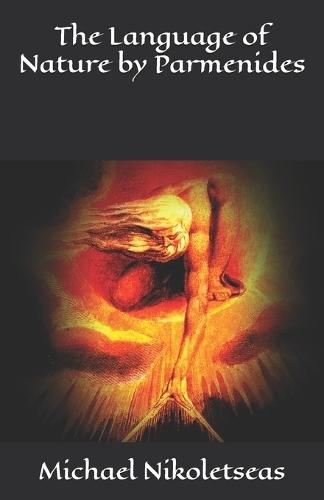
In the annals of philosophical inquiry, few texts have endured with the enigmatic profundity of Parmenides' poem On Nature. Composed in the early fifth century BCE, this fragmentary work challenges the very foundations of human thought, asserting the unity and immutability of Being while dismissing multiplicity, change, and non-being as illusions born of sensory deception and linguistic inadequacy. Yet, for centuries, interpretations of Parmenides have been filtered through the lenses of later philosophers-Plato, Aristotle, and their successors-who often domesticated his radical insights to fit within the confines of natural language and anthropocentric worldviews. This book seeks to reclaim Parmenides' vision not as a metaphysical puzzle but as a prescient critique of language itself: a recognition that the vernacular of everyday speech, evolved for social and subjective purposes, falters when tasked with articulating the objective structures of the natural world. Drawing upon my background as a natural scientist and philosopher, these essays reinterpret Parmenides' poem through the prism of modern scientific epistemology, revealing it as an early attempt to forge a ""language of nature""-a formal, non-verbal system akin to the mathematical models that underpin contemporary physics. Central to this reading is the influence of Heraclitus, whose doctrine of flux and hidden harmony Parmenides paraphrases and refines, proposing Being as a logical necessity that transcends the ambiguities of words. As I argue, these Pre-Socratic thinkers were acutely aware of the limitations of natural languages, which embed sensory biases and cultural contingencies, making them ill-suited for the rigorous modeling demanded by empirical inquiry. Their nascent proposals for alternative modes of cognition-Heraclitus' modus cogitandi and Parmenides' immutable ""It is""-anticipate the formalisms of logic, mathematics, and statistics that would later revolutionize science. This volume traces the historical reluctance to acknowledge these linguistic shortcomings, from the verbal entrenchments of classical and medieval philosophy to the mathematical awakenings of the Scientific Revolution and the analytic critiques of the twentieth century. It integrates insights from key figures such as Galileo, Kant, Wittgenstein, and Ayer, while highlighting how breakthroughs in formal systems gradually exposed the grip of language on cognition. Yet, even in our era of quantum mechanics and computational models, where metaphors like ""wave-particle duality"" strain verbal expression, the challenge persists: we remain immersed in language, critiquing it from within. These essays are the culmination of years of interdisciplinary reflection, informed by my prior works on Heraclitus, truth in science, and statistical reasoning. They aim not only to elucidate Parmenides' enduring relevance but to provoke a broader dialogue on how we might transcend linguistic barriers to better grasp the cosmos. I am grateful to the scholars whose interpretations have inspired this endeavor, and to the fragments of antiquity that continue to speak across millennia.
Full Product Details
Author: Michael M Nikoletseas
Publisher: Independently Published
Imprint: Independently Published
Dimensions:
Width: 14.00cm
, Height: 0.80cm
, Length: 21.60cm
Weight: 0.168kg
ISBN: 9798292903604
Pages: 138
Publication Date: 20 July 2025
Audience:
General/trade
,
General
Format: Paperback
Publisher's Status: Active
Availability: Available To Order

We have confirmation that this item is in stock with the supplier. It will be ordered in for you and dispatched immediately.