Overview
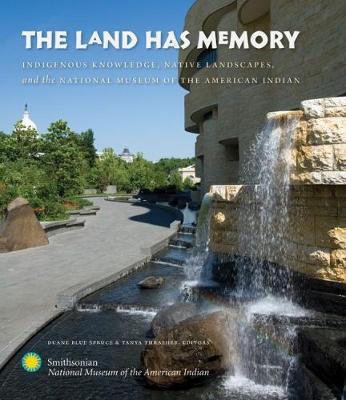
This book includes the stories and meanings behind the museum's landscape.In the heart of Washington, D.C., a centuries-old landscape has come alive in the twenty-first century through a re-creation of the natural environment as the region's original peoples might have known it. Unlike most landscapes that surround other museums on the National Mall, the natural environment around the Smithsonian's National Museum of the American Indian (NMAI) is itself a living exhibit, carefully created to reflect indigenous ways of thinking about the land and its uses.Abundantly illustrated, """"The Land Has Memory"""" offers beautiful images of the museum's natural environment in every season as well as the uniquely designed building itself. Essays by Smithsonian staff and others involved in the museum's creation provide an examination of indigenous peoples' long and varied relationship to the land in the Americas, an account of the museum designers' efforts to reflect traditional knowledge in the creation of individual landscape elements, detailed descriptions of the 150 native plant species used, and an exploration of how the landscape changes seasonally. """"The Land Has Memory"""" serves not only as an attractive and informative keepsake for museum visitors, but also as a thoughtful representation of how traditional indigenous ways of knowing can be put into practice.
Full Product Details
Author: Tanya Thrasher ,
Tanya Thrasher
Publisher: The University of North Carolina Press
Imprint: The University of North Carolina Press
Edition: New edition
Dimensions:
Width: 20.30cm
, Height: 2.00cm
, Length: 23.50cm
Weight: 0.739kg
ISBN: 9780807832646
ISBN 10: 0807832642
Pages: 184
Publication Date: 01 February 2009
Audience:
General/trade
,
General
Format: Hardback
Publisher's Status: Out of Print
Availability: Awaiting stock

Reviews
A refreshing book on museology . . . [with a] sincere, value-infused presentation. . . . The reader comes away with a deeper understanding of the underpinnings of Native worldview, and certainly with a deeper understanding of the interconnectedness, the balancing, of the human, natural, animal, and spiritual worlds. -- Journal of Folklore Research Editors Duane Blue Spruce and Tanya Thrasher have brought together an array of voices that tell an engrossing story of the indigenous environment that once again inhabits a small corner of the National Mall. . . . Sumptuously illustrated. . . . The essays, which educate readers about Native ways of knowing and the land itself, offer meticulous accounts of how the museum's natural setting was developed. . . . Drenched in color, the images provide readers with a mesmerizing view of the landscape and its inhabitants. - American Indian Quarterly This book paints spectacular word pictures of a place as old as the land, which lovingly embraces the everlasting life-giving spirits within and without. It contains powerful stories of historic proportions, of honor, of revered gifts, and of the triumphant human spirit epitomized in the National Museum of the American Indian. -- Henri Mann, president, Cheyenne and Arapaho Tribal College The built environment surrounding the National Museum of the American Indian complements the interior of the museum, which reflects many of the communities--animate and inanimate--the museum represents. The Land Has Memory is a triumph, capturing the beauty and complexity of the Native Universe and the intimate relationship between Native Americans and the plants, places, and peoples that share the natural world. The book captures the power and spirit of place in Native American cultures, past and present. -- Clifford E. Trafzer, Rupert Costo Chair, University of California, Riverside, and coeditor, Native Universe
The built environment surrounding the National Museum of the American Indian complements the interior of the museum, which reflects many of the communities--animate and inanimate--the museum represents. The Land Has Memory is a triumph, capturing the beauty and complexity of the Native Universe and the intimate relationship between Native Americans and the plants, places, and peoples that share the natural world. The book captures the power and spirit of place in Native American cultures, past and present. <br> a Clifford E. Trafzer, Rupert Costo Chair, University of California, Riverside, and coeditor, Native Universe
Author Information
Duane Blue Spruce (Laguna/San Juan Pueblo), an architect, served for ten years as the primary liaison between the museum and the architectural design and construction team. He currently works at NMAI's George Gustav Heye Center in New York.||Tanya Thrasher (Cherokee Nation of Oklahoma) is assistant head of publications at NMAI