|
|
|||
|
||||
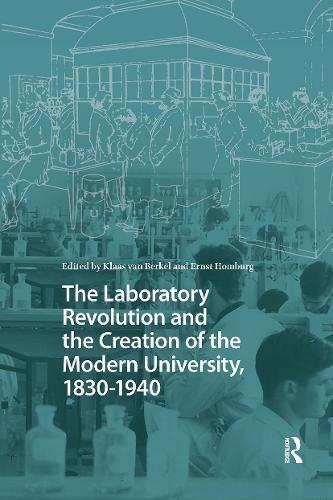
OverviewThe modern research university originated in Europe in the second half of the nineteenth century, largely due to the creation and expansion of the teaching and research laboratory. The universities and the sciences underwent a laboratory revolution that fundamentally changed the nature of both. This revolutionary development began in chemistry, where Justus Liebig is credited with systematically employing his students in his ongoing research during the 1830s. Later, this development spread to other fields, including the social sciences and the humanities. The consequences for the universities were colossal. The expansion of the laboratories demanded extensive new building programs, reshaping the outlook of the university. The social structure of the university also diversified because of this laboratory expansion, while what it meant to be a scientist changed dramatically. This volume explores the spatial, social, and cultural dimensions of the rise of the modern research laboratory within universities and their consequent reshaping. Full Product DetailsAuthor: Klaas van Berkel , Ernst HomburgPublisher: Taylor & Francis Ltd Imprint: Routledge Weight: 0.640kg ISBN: 9781041188339ISBN 10: 1041188331 Pages: 346 Publication Date: 01 December 2025 Audience: Professional and scholarly , Professional & Vocational Format: Paperback Publisher's Status: Active Availability: Manufactured on demand We will order this item for you from a manufactured on demand supplier. Table of ContentsReviewsAuthor InformationKlaas van Berkel recently retired as Rudolf Agricola professor of history at the University of Groningen. In his research he focuses on cultural history and the history of science, especially the history of scientific institutions (academies, universities). In 2021 he published, with Guus Termeer, The University of Groningen in the World. A Concise History (Amsterdam: Pallas Publications). Ernst Homburg is professor of history of science and technology emeritus at Maastricht University. His research is mainly on the interaction between science and technology in industry and academia, from the nineteenth to the twenty-first century. His most recent book publications are: Hazardous Chemicals: Agents of Risk and Change, 1800–2000 (New York, Oxford: Berghahn, 2019), edited with Elisabeth Vaupel, and Een eeuw chemische technologie in Nederland (Delft: Stichting Hoogewerff-Fonds, 2021), with Ton van Helvoort. Tab Content 6Author Website:Countries AvailableAll regions |
||||