Overview
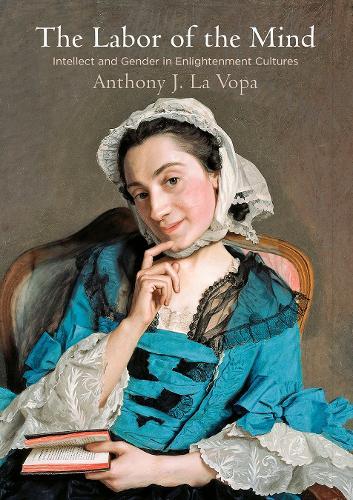
How did educated and cultivated men in early modern France and Britain perceive and value their own and women's cognitive capacities, and how did women in their circles challenge those perceptions, if only by revaluing the kinds of intelligence attributed to them? What was thought to distinguish the ""manly mind"" from the feminine mind? How did awareness of these questions inform various kinds of published and unpublished texts, including the philosophical treatise, the dialogue, the polite essay, and the essay in literary criticism? The Labor of the Mind plumbs the social and cultural logic of the Enlightenment's trope of the manly mind; offers new readings of the textual representations of it; and examines the ways in which the trope was subverted or at least subtly questioned. With close readings of the writings of well-known and less familiar men and women, including Poullain de la Barre, The Third Earl of Shaftesbury, Madeleine de Scudery, David Hume, Antoine-Leonard Thomas, Suzanne Curchod Necker, Denis Diderot, and Louise d'Epinay, and tracing their social networks and friendships, Anthony J. La Vopa explores the problematic opposition between mental labor as concentrated and sustained work, a labor of abstraction and judgment for which only men had the strength, and an aesthetic of effortless and tasteful play in polite conversation in which women were thought to excel. Covering nearly a century and a half of cultural and intellectual life from France to England and Scotland and then back again, La Vopa locates, beneath the tenacity of assumed natural differences, a lexicon imbued with ambivalence, ambiguity, and argument. The Labor of the Mind reveals the legacy for modernity of a fraught gendering of intellectual labor.
Full Product Details
Author: Anthony J. La Vopa
Publisher: University of Pennsylvania Press
Imprint: University of Pennsylvania Press
ISBN: 9780812249286
ISBN 10: 0812249283
Pages: 360
Publication Date: 07 September 2017
Audience:
College/higher education
,
Tertiary & Higher Education
Format: Hardback
Publisher's Status: Active
Availability: Manufactured on demand

We will order this item for you from a manufactured on demand supplier.
Reviews
The Labor of the Mind is a terrific book and a magisterial contribution to Enlightenment studies, to intellectual history, and especially to gender studies. Labor, as the practice of intellectual work, and gender serve as two prongs of incisive analysis running through the book. By grounding texts and ideas in the lives and experiences of the men and women who wrote them, Anthony J. La Vopa has breathed new life into the intellectual history of the eighteenth century. -Mary Terrall, University of California, Los Angeles This excellent new book all but overflows with unusually erudite and insightful analysis of an impressive array of interesting and important figures, notably Poullain de la Barre, Nicolas Malebranche, the marquise de Lambert, the earl of Shaftesbury, David Hume, Antoine-Leonard Thomas, Suzanne Necker, Denis Diderot, and Louise d'Epinay . . . The Labor of the Mind will take its place as an indispensable work of seventeenth- and eighteenth-centuryWestern European intellectual history. -Journal of Modern History [A]n impressive tour de force - the result of many years of research and reflection . . . [A] rich, subtle, and refined work, full of deep historical wisdom but devoid of any excessive display of erudition; sophisticated and precise in its analysis, clear and elegant in its writing; utterly readable and enjoyable. It is a book from which we historians of every branch of the discipline will learn precious lessons - about the past and about our craft. -Early Modern Women A thoughtful historicist study of how men and a few women in seventeenth and eighteenth-century France, England, and Scotland construed the relationship between intelligence, gender, and work, The Labor of the Mind is a welcome example of scholarship that brings a gender-studies perspective to the often male-centric field of intellectual history . . . La Vopa's book makes a major contribution to the ongoing debate in eighteenth-century French studies surrounding the relative roles of gender, social status, and intellectual seriousness in salon culture. -Modern Philology The Labor of the Mind is the most subtle and innovative study of Enlightenment thought in decades. Taking conversations rather than printed texts as his starting point, and reaching back deeply into the seventeenth century, Anthony J. La Vopa shows how male-female friendships within an aristocratic culture produced both intellectual dynamism and anxieties about the feminization of the mind. La Vopa interweaves the ideas and conversational practices of such prominent writers as David Hume and Denis Diderot with those of lesser-known figures such as Poullain de la Barre and Suzanne Necker, offering fascinating insights about these thinkers as both human beings and as makers of our modern understandings of femininity and manliness. -Suzanne Marchard, Louisiana State University
The Labor of the Mind is a terrific book and a magisterial contribution to Enlightenment studies, to intellectual history, and especially to gender studies. Labor, as the practice of intellectual work, and gender serve as two prongs of incisive analysis running through the book. By grounding texts and ideas in the lives and experiences of the men and women who wrote them, Anthony J. La Vopa has breathed new life into the intellectual history of the eighteenth century. -Mary Terrall, University of California, Los Angeles The Labor of the Mind is the most subtle and innovative study of Enlightenment thought in decades. Taking conversations rather than printed texts as his starting point, and reaching back deeply into the seventeenth century, Anthony J. La Vopa shows how male-female friendships within an aristocratic culture produced both intellectual dynamism and anxieties about the feminization of the mind. La Vopa interweaves the ideas and conversational practices of such prominent writers as David Hume and Denis Diderot with those of lesser-known figures such as Poullain de la Barre and Suzanne Necker, offering fascinating insights about these thinkers as both human beings and as makers of our modern understandings of femininity and manliness. -Suzanne Marchard, Louisiana State University
The Labor of the Mind is the most subtle and innovative study of Enlightenment thought in decades. Taking conversations rather than printed texts as his starting point, and reaching back deeply into the seventeenth century, Anthony J. La Vopa shows how male-female friendships within an aristocratic culture produced both intellectual dynamism and anxieties about the feminization of the mind. La Vopa interweaves the ideas and conversational practices of such prominent writers as David Hume and Denis Diderot with those of lesser-known figures such as Poullain de la Barre and Suzanne Necker, offering fascinating insights about these thinkers as both human beings and as makers of our modern understandings of femininity and manliness. -Suzanne Marchard, Louisiana State University A thoughtful historicist study of how men and a few women in seventeenth and eighteenth-century France, England, and Scotland construed the relationship between intelligence, gender, and work, The Labor of the Mind is a welcome example of scholarship that brings a gender-studies perspective to the often male-centric field of intellectual history . . . La Vopa's book makes a major contribution to the ongoing debate in eighteenth-century French studies surrounding the relative roles of gender, social status, and intellectual seriousness in salon culture. -Modern Philology The Labor of the Mind is a terrific book and a magisterial contribution to Enlightenment studies, to intellectual history, and especially to gender studies. Labor, as the practice of intellectual work, and gender serve as two prongs of incisive analysis running through the book. By grounding texts and ideas in the lives and experiences of the men and women who wrote them, Anthony J. La Vopa has breathed new life into the intellectual history of the eighteenth century. -Mary Terrall, University of California, Los Angeles
The Labor of the Mind is the most subtle and innovative study of Enlightenment thought in decades. Taking conversations rather than printed texts as his starting point, and reaching back deeply into the seventeenth century, Anthony J. La Vopa shows how male-female friendships within an aristocratic culture produced both intellectual dynamism and anxieties about the feminization of the mind. La Vopa interweaves the ideas and conversational practices of such prominent writers as David Hume and Denis Diderot with those of lesser-known figures such as Poullain de la Barre and Suzanne Necker, offering fascinating insights about these thinkers as both human beings and as makers of our modern understandings of femininity and manliness. -Suzanne Marchard, Louisiana State University A thoughtful historicist study of how men and a few women in seventeenth and eighteenth-century France, England, and Scotland construed the relationship between intelligence, gender, and work, The Labor of the Mind is a welcome example of scholarship that brings a gender-studies perspective to the often male-centric field of intellectual history . . . La Vopa's book makes a major contribution to the ongoing debate in eighteenth-century French studies surrounding the relative roles of gender, social status, and intellectual seriousness in salon culture. -Modern Philology This excellent new book all but overflows with unusually erudite and insightful analysis of an impressive array of interesting and important figures, notably Poullain de la Barre, Nicolas Malebranche, the marquise de Lambert, the earl of Shaftesbury, David Hume, Antoine-Leonard Thomas, Suzanne Necker, Denis Diderot, and Louise d'Epinay . . . The Labor of the Mind will take its place as an indispensable work of seventeenth- and eighteenth-centuryWestern European intellectual history. -Journal of Modern History The Labor of the Mind is a terrific book and a magisterial contribution to Enlightenment studies, to intellectual history, and especially to gender studies. Labor, as the practice of intellectual work, and gender serve as two prongs of incisive analysis running through the book. By grounding texts and ideas in the lives and experiences of the men and women who wrote them, Anthony J. La Vopa has breathed new life into the intellectual history of the eighteenth century. -Mary Terrall, University of California, Los Angeles
Author Information
Anthony J. La Vopa is Professor Emeritus of History at North Carolina State University.