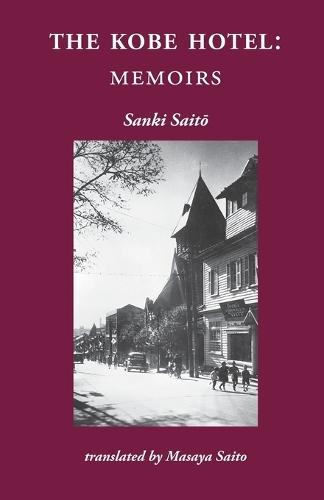
Overview
The Kobe Hotel is a revised edition, with an informative new introduction, of Masaya Saito's translations of Sanki Saitō's Kobe and Kobe Sequel, originally published by Weatherhill in 1993. Written by the leading figure of the New Rising Haiku movement, these prose pieces were serialized in haiku journals in the 1950s as a record of Sanki's experience of wartime and its aftermath. In 1942, having been silenced by the Special Higher Police, Sanki left Tokyo for Kobe, where he remained for the rest of the war. From his arrival in the city until its almost complete destruction in the fire bombing of 1945, he lived in a run-down hotel along with a diverse community of cosmopolitan lodgers - White Russian, Egyptian, Tartar, Korean, Taiwanese - all of them eking out a hand-to-mouth wartime existence, as were the dozen or so Japanese bar hostesses also living in the hotel. Sanki observed all these people with an alert and sympathetic eye. As he wrote in Kobe Sequel, 'Like them, I too believed that freedom, and nothing else, was the highest reason for living.' These memoirs, full of vigor, tragedy, sympathy and humor, are a tribute to ordinary people living freely despite Japan at that time being a police state engaged in total war. As the famous novelist and essayist Itsuki Hiroyuki wrote in his blurb for the initial publication of these memoirs in book form in1975 'I have no doubt that this is a masterpiece which will remain in the history of Shōwa-era literature.'
Full Product Details
Author: Sanki Saitō ,
Masaya Saito
Publisher: Isobar Press
Imprint: Isobar Press
Edition: 2nd ed.
Dimensions:
Width: 14.00cm
, Height: 0.90cm
, Length: 21.60cm
Weight: 0.200kg
ISBN: 9784907359454
ISBN 10: 4907359454
Pages: 152
Publication Date: 01 September 2023
Audience:
General/trade
,
General
Format: Paperback
Publisher's Status: Active
Availability: Available To Order

We have confirmation that this item is in stock with the supplier. It will be ordered in for you and dispatched immediately.
Reviews
"The haiku poet Sanki Saitō (1900-1962) has been characterized by more than three dozen epithets during his life and since his death, says Masaya Saito (no relation) - among them: avant-gardist, standard-bearer of the New Rising Haiku movement, l'étranger, epicurean bohemian, aristocrat, vagabond. You may also add what novelist Itsuki Hiroyuki has called him: ""a figure in Dostoevsky novel, political yet artistic, fiercely attached to sex yet contrastingly nihilistic."" Other than a sizable number of haiku, Sanki left prose accounts of his life. One of them, Kobe, deals with the few years he spent in the international port town for which he abandoned his wife and son in Tokyo, shortly after Japan plunged into war with the United States, Britain, and the Netherlands. He packs this account with fascinating characters: an expatriate Egyptian, prostitutes (Japanese, Korean, Taiwanese), military nurses, a draft-evader, German sailors, a Russian, a Turk. Here Masaya Saito, the author of the much praised English haiku sequence Snow Bones, translates these memoirs along with another account of Sanki's, Kobe Sequel, in which he depicts the turmoil before and after Japan's defeat in unadorned fashion. - Hiroaki Sato"
Author Information
Sanki Saitō was born in western Japan in 1900. He trained as a dentist, working first in Singapore and later in Tokyo. He did not begin to write haiku until the age of 33, but he then rapidly became a leading figure in the poetically radical New Rising Haiku movement. In 1940 his writing caused him to be arrested by the Higher Special Police on the charge of violating the Peace Preservation Law; he was given a suspended sentence and forbidden to write. In 1942 he left Tokyo for Kobe; his Bohemian life in the wartime port city before its destruction is vividly described in his memoirs The Kobe Hotel. After 1945 he began to write again and published three major collections of haiku that set a benchmark for postwar haiku: A Peach at Night (1948), Today (1952) and Metamorphoses (1962). From 1956 to 1957 he was editor of Haiku, Japan's leading haiku journal. He died of stomach cancer in 1962 in Hayama, Kanagawa Prefecture. More than six decades after his death, Sanki is still embraced as truly unique not only by haiku poets both radical and traditional, but also by tanka and free verse poets. Masaya Saito's Japanese-language haiku have appeared widely, and in 2007 he won the Asahi Haiku Shinjin Award for his sequence of fifty haiku, Gasshō. His English haiku have been published in Ash (TELS Press, 1988) and Snow Bones (Isobar Press, 2016), and in the anthology Haiku in English: The First Hundred Years (Norton, 2013), while his English translations of Japanese haiku appear in The Columbia Anthology of Modern Japanese Literature (Columbia UP, 2005). In 2023 he published his translation Selected Haiku 1933-1962 by Sanki Saitō, and earlier versions of his translations of Sanki's autobiographical essays and haiku were published by Weatherhill in 1993.