Overview
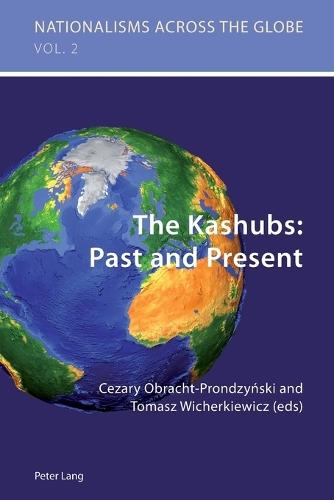
The Kashubs, a regional autochthonous group inhabiting northern Poland, represent one of the most dynamic ethnic groups in Europe. As a community, they have undergone significant political, social, economic and cultural change over the last hundred years. At the beginning of the twentieth century, the Kashubs were citizens of Germany. In the period between the two World Wars they were divided between three political entities: the Republic of Poland, the Free City of Danzig and Germany. During the Second World War, many Kashubs were murdered, and communist Poland subsequently tried to destroy the social ties that bound the community together. The year 1989 finally brought about a democratic breakthrough, at which point the Kashubs became actively engaged in the construction of their regional identity, with the Kashubian language performing a particularly important role. This volume is the first scholarly monograph on the history, culture and language of the Kashubs to be published in English since 1935. The book systematically explores the most important aspects of Kashubian identity – national, regional, linguistic, cultural and religious – from both historical and contemporary perspectives.
Full Product Details
Author: Krzysztof Jaskulowski ,
Tomasz Kamusella ,
Cezary Obracht-Prondzynski ,
Tomasz Wicherkiewicz
Publisher: Verlag Peter Lang
Imprint: Verlag Peter Lang
Edition: New edition
Volume: 2
Weight: 0.440kg
ISBN: 9783039119752
ISBN 10: 3039119753
Pages: 299
Publication Date: 08 September 2011
Audience:
Professional and scholarly
,
Professional & Vocational
Format: Paperback
Publisher's Status: Active
Availability: Out of stock

The supplier is temporarily out of stock of this item. It will be ordered for you on backorder and shipped when it becomes available.
Reviews
Man kann nur wunschen, dass diese ausfuhrliche und in ihren Bewertungen recht ausgewogene Darstellung der kaschubischen Sache aus der Feder der Betroffenen ein breites Echo findet. Sie hat es verdient, da sie gegenwartig die ausfuhrlichste wissenschaftliche Darstellung zu diesem Thema in einer westlichen Sprache ist. (Klaus Steinke, Informationsmittel fur Bibliotheken 20, 2012/2)
Man kann nur wuenschen, dass diese ausfuehrliche und in ihren Bewertungen recht ausgewogene Darstellung der kaschubischen Sache aus der Feder der Betroffenen ein breites Echo findet. Sie hat es verdient, da sie gegenwaertig die ausfuehrlichste wissenschaftliche Darstellung zu diesem Thema in einer westlichen Sprache ist. (Klaus Steinke, Informationsmittel fuer Bibliotheken 20, 2012/2)
Author Information
Cezary Obracht-Prondzyński is Professor of Sociology at the University of Gdańsk, Poland. He is vice-president of the Kashubian Institute, a former editor-in-chief of Pomerania and editorial secretary for Acta Cassubiana. He is the author of numerous books and articles on Kashubian identity and history, including Kaszubi. Między dyskryminacją a regionalną podmiotowością. Tomasz Wicherkiewicz is Adjunct Professor in Linguistics and Chair of Oriental Studies at Adam Mickiewicz University in Poznań, Poland. He is a member of the Kashubian Language Board and the Kashubian Institute and carries out field research among minority language communities in Europe and Asia. He is the author of The Making of a Language: The Case of the Idiom of Wilamowice, Southern Poland.