Overview
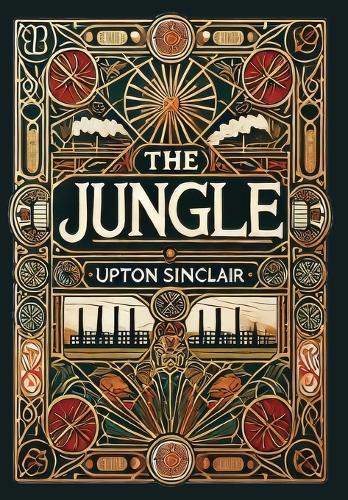
Collector's Edition Laminated Hardback with Jacket In the heart of Chicago's brutal meatpacking industry, a young immigrant named Jurgis Rudkus arrives with dreams of prosperity, only to be met with relentless exploitation and hardship. As he and his family struggle to survive grueling labor, unsanitary conditions, and corrupt business practices, their hopes for the American Dream begin to crumble. The novel exposes the shocking realities of industrial capitalism, revealing a world where greed reigns and the powerless are crushed beneath it. Through Jurgis's journey, Sinclair paints a gripping portrait of resilience, injustice, and the fight for dignity in a system designed to break the weak. The Jungle played a pivotal role in raising awareness about the inhumane conditions of America's industrialized meatpacking industry during the early 20th century. Upton Sinclair's vivid portrayal of unsanitary practices and worker exploitation shocked the nation, leading to widespread public outcry. The book's impact was so profound that it directly contributed to the passage of the Pure Food and Drug Act and the Meat Inspection Act in 1906. Sinclair's work not only exposed the dark side of industrialization but also spurred important reforms that forever changed the landscape of American labor and food safety.
Full Product Details
Author: Upton Sinclai
Publisher: Revive Classics
Imprint: Revive Classics
Dimensions:
Width: 15.20cm
, Height: 2.20cm
, Length: 22.90cm
Weight: 0.612kg
ISBN: 9781998736539
ISBN 10: 1998736539
Pages: 332
Publication Date: 04 March 2025
Audience:
General/trade
,
General
Format: Hardback
Publisher's Status: Active
Availability: Available To Order

We have confirmation that this item is in stock with the supplier. It will be ordered in for you and dispatched immediately.
Author Information
Born on September 20, 1878, in Baltimore, Maryland, Upton Beall Sinclair Jr. was an American writer and social reformer. He is best known for his 1906 novel, The Jungle, which exposed the appalling conditions in the U.S. meatpacking industry. This work led to significant public outcry and contributed to the passage of the Pure Food and Drug Act and the Meat Inspection Act.Throughout his career, Sinclair authored nearly 100 books across various genres, often focusing on social injustices and the struggles of the working class. His 1927 novel, Oil!, delved into the corruption of the oil industry and served as the inspiration for the film There Will Be Blood. In 1943, he was awarded the Pulitzer Prize for Fiction for his novel Dragon's Teeth, which examined the rise of Nazism in Germany.Beyond writing, Sinclair was an active political figure, running for public office multiple times, including a notable campaign for governor of California in 1934 under the ""End Poverty in California"" platform. Although he did not win, his efforts highlighted issues of economic inequality and influenced future social policies. Sinclair's dedication to social reform and his prolific literary output left a lasting impact on American society and literature.