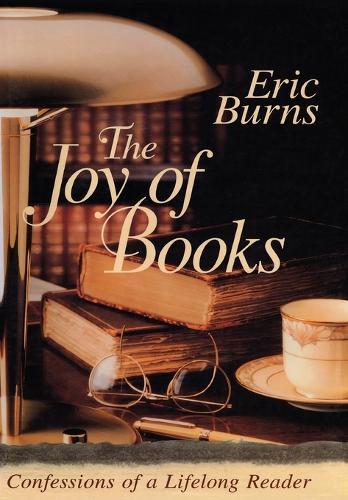
Full Product Details
Author: Eric Burns
Publisher: Prometheus Books
Imprint: Prometheus Books
Dimensions:
Width: 15.20cm
, Height: 1.30cm
, Length: 22.90cm
Weight: 0.454kg
ISBN: 9781573920049
ISBN 10: 1573920045
Pages: 218
Publication Date: 01 November 1995
Audience:
College/higher education
,
Professional and scholarly
,
Undergraduate
,
Postgraduate, Research & Scholarly
Format: Hardback
Publisher's Status: Active
Availability: Manufactured on demand

We will order this item for you from a manufactured on demand supplier.
Reviews
An autodidact's breezy digest of the historical and personal importance of the book, with few intellectual pretensions and only a couple of political and cultural ones. Burns's career began in television, first as a news reporter, then as a media critic, and finally as a dissenter with his first book, Broadcast Blues (1993). For his defense of the book and the pleasure of reading, Burns artfully employs his genial style, which is as easily read as delivered on TV, despite occasional slips from chattiness into sarcasm. In print, he has the advantage of embellishing his cribs from the Durants' Story of Civilization, Daniel Boorstin's The Americans, and Neil Postman's techno-cultural criticism with amusing anecdotes and remarks from the likes of H.L. Mencken, Goethe, and others. Burns follows up a whirlwind history of writing, printing, and bookmaking (encompassing the library of Alexandria under Ptolemy and monastic scribes of the Middle Ages) with an even broader one of censorship from Protagoras and Milton to Joseph McCarthy and contemporary school boards. In the latter case, the brief accounts of Anthony Comstock and his Society for the Suppression of Vice and the genteel censor Thomas Bowdler are matched with contemporary incidents such as attacks on Huckleberry Finn and Burns's own vivid experience of a small-town book burning, which he filmed for television. These historical and contemporary parallels have more force than the author's second-hand diatribes against slipping educational standards and the epistemological evils of deconstruction. Still, he optimistically if sentimentally frames all this with his and his son's mutual childhood enjoyment of Peter Pan. In this switch in medium from the box to the book, Burns has a more or less effective forum for his pop critiques. (Kirkus Reviews)
Author Information
Eric Burns is a uniquely varied man of letters. His first play won the Eudora Welty Emerging Playwrights Completion. As an NBC News correspondent, in addition to being an Emmy winner, he was named one of the best writers in the history of television news. And as an author, he has twice won the American Library Association's ""Best of the Best"" award (for The Spirits of American: A Social History of Alcohol in 2004, and The Smoke of the Gods: A Social History of Tobacco in 2007). He has also written 1920: The Year That Made the Decade Roar, chosen by Kirkus Reviews as one of the best non-fiction books of 2015. He lives in Westport, Connecticut.