Overview
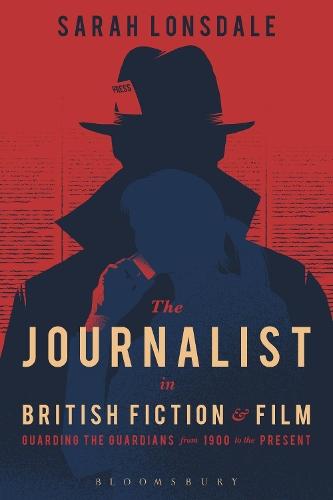
Why did Edwardian novelists portray journalists as swashbuckling, truth-seeking super-heroes whereas post-WW2 depictions present the journalist as alienated outsider? Why are contemporary fictional journalists often deranged, murderous or intensely vulnerable? As newspaper journalism faces the double crisis of a lack of trust post-Leveson, and a lack of influence in the fragmented internet age, how do cultural producers view journalists and their role in society today? In The Journalist in British Fiction and Film Sarah Lonsdale traces the ways in which journalists and newspapers have been depicted in fiction, theatre and film from the dawn of the mass popular press to the present day. The book asks first how journalists were represented in various distinct periods of the 20th century and then attempts to explain why these representations vary so widely. This is a history of the British press, told not by historians and sociologists, but by writers and directors as well as journalists themselves. In uncovering dozens of forgotten fictions, Sarah Lonsdale explores the bare-knuckled literary combat conducted by writers contesting the disputed boundaries between literature and journalism. Within these texts and films there is perhaps also a clue as to how the best aspects of ‘Fourth estate’ journalism can survive in the digital age. Authors covered in the volume include: Martin Amis, Graham Greene, George Orwell, Pat Barker, Evelyn Waugh, Elizabeth Bowen, Arnold Wesker and Rudyard Kipling. Television and films covered include House of Cards (US and UK versions), Spotlight, Defence of the Realm, Secret State and State of Play.
Full Product Details
Author: Sarah Lonsdale (City University, London, UK.)
Publisher: Bloomsbury Publishing PLC
Imprint: Bloomsbury Academic
Dimensions:
Width: 15.60cm
, Height: 1.80cm
, Length: 23.40cm
Weight: 0.585kg
ISBN: 9781474220538
ISBN 10: 1474220533
Pages: 296
Publication Date: 14 July 2016
Audience:
College/higher education
,
Undergraduate
,
Postgraduate, Research & Scholarly
Format: Hardback
Publisher's Status: Active
Availability: Manufactured on demand

We will order this item for you from a manufactured on demand supplier.
Reviews
From heroes to media scum, this book provides an assessment of how journalists have been represented in fictional form. It also makes a major contribution to considerations of the much-derided 'middle-brow'. It grafts this longitudinal analysis onto a rich and engaging history of journalism itself. Reclaiming the role of the journalist for the contemporary age - journalists and the public, take note - you need each other! Martin Conboy, Professor of Journalism History, University of Sheffield, UK This book essential reading for anyone who wants to know how we've come to feel about journalists and journalism the way we do. Sarah Lonsdale's great and original achievement is to use fiction, film and theatre to trace the Fourth Estate's reputational ups and downs over the last 100 years. This is a work of immaculate scholarship deeply informed by Lonsdale's long and eminent career as a newspaper journalist. Kathryn Hughes, Professor of Life Writing, University of East Anglia, UK Lonsdale doesn't just chart the fictional journalist's cycle from villain to hero and back again but shows clearly how much and simultaneously, how little has changed over the past 100 years. The one thing that never alters is how journalists persistently live down to others' expectations and take pleasure in their ambiguous reputation. It's a strange trade and Lonsdale's fascinating guide to how others see us should be both a warning and something for us all to aim for. If as a journalist you don't want to anger or irritate people you're in the wrong job. Susie Boniface, journalist, aka 'Fleet Street Fox'
A riveting read for would-be writers ... It's a fascinating bit of academic research ... as well as a great tour through over a century of bookshelves and movie-studio cutting rooms. The Observer [A] thorough and entertaining book. Prospect From heroes to media scum, this book provides an assessment of how journalists have been represented in fictional form. It also makes a major contribution to considerations of the much-derided 'middle-brow'. It grafts this longitudinal analysis onto a rich and engaging history of journalism itself. Reclaiming the role of the journalist for the contemporary age - journalists and the public, take note - you need each other! Martin Conboy, Professor of Journalism History, University of Sheffield, UK This book essential reading for anyone who wants to know how we've come to feel about journalists and journalism the way we do. Sarah Lonsdale's great and original achievement is to use fiction, film and theatre to trace the Fourth Estate's reputational ups and downs over the last 100 years. This is a work of immaculate scholarship deeply informed by Lonsdale's long and eminent career as a newspaper journalist. Kathryn Hughes, Professor of Life Writing, University of East Anglia, UK Lonsdale doesn't just chart the fictional journalist's cycle from villain to hero and back again but shows clearly how much and simultaneously, how little has changed over the past 100 years. The one thing that never alters is how journalists persistently live down to others' expectations and take pleasure in their ambiguous reputation. It's a strange trade and Lonsdale's fascinating guide to how others see us should be both a warning and something for us all to aim for. If as a journalist you don't want to anger or irritate people you're in the wrong job. Susie Boniface, journalist, aka 'Fleet Street Fox'
A riveting read for would-be writers ... It's a fascinating bit of academic research ... as well as a great tour through over a century of bookshelves and movie-studio cutting rooms. The Observer Lonsdale's analysis reaches further back in history than most studies of the media ... A first rate-book that amply demonstrates why ... journalists who speak truth to power are needed more than ever. Times Literary Supplement [A] thorough and entertaining book. Prospect From heroes to media scum, this book provides an assessment of how journalists have been represented in fictional form. It also makes a major contribution to considerations of the much-derided 'middle-brow'. It grafts this longitudinal analysis onto a rich and engaging history of journalism itself. Reclaiming the role of the journalist for the contemporary age - journalists and the public, take note - you need each other! Martin Conboy, Professor of Journalism History, University of Sheffield, UK This book essential reading for anyone who wants to know how we've come to feel about journalists and journalism the way we do. Sarah Lonsdale's great and original achievement is to use fiction, film and theatre to trace the Fourth Estate's reputational ups and downs over the last 100 years. This is a work of immaculate scholarship deeply informed by Lonsdale's long and eminent career as a newspaper journalist. Kathryn Hughes, Professor of Life Writing, University of East Anglia, UK Lonsdale doesn't just chart the fictional journalist's cycle from villain to hero and back again but shows clearly how much and simultaneously, how little has changed over the past 100 years. The one thing that never alters is how journalists persistently live down to others' expectations and take pleasure in their ambiguous reputation. It's a strange trade and Lonsdale's fascinating guide to how others see us should be both a warning and something for us all to aim for. If as a journalist you don't want to anger or irritate people you're in the wrong job. Susie Boniface, journalist, aka 'Fleet Street Fox'
[A] thorough and entertaining book. Prospect From heroes to media scum, this book provides an assessment of how journalists have been represented in fictional form. It also makes a major contribution to considerations of the much-derided 'middle-brow'. It grafts this longitudinal analysis onto a rich and engaging history of journalism itself. Reclaiming the role of the journalist for the contemporary age - journalists and the public, take note - you need each other! Martin Conboy, Professor of Journalism History, University of Sheffield, UK This book essential reading for anyone who wants to know how we've come to feel about journalists and journalism the way we do. Sarah Lonsdale's great and original achievement is to use fiction, film and theatre to trace the Fourth Estate's reputational ups and downs over the last 100 years. This is a work of immaculate scholarship deeply informed by Lonsdale's long and eminent career as a newspaper journalist. Kathryn Hughes, Professor of Life Writing, University of East Anglia, UK Lonsdale doesn't just chart the fictional journalist's cycle from villain to hero and back again but shows clearly how much and simultaneously, how little has changed over the past 100 years. The one thing that never alters is how journalists persistently live down to others' expectations and take pleasure in their ambiguous reputation. It's a strange trade and Lonsdale's fascinating guide to how others see us should be both a warning and something for us all to aim for. If as a journalist you don't want to anger or irritate people you're in the wrong job. Susie Boniface, journalist, aka 'Fleet Street Fox'
Author Information
Sarah Lonsdale is a Lecturer in Journalism at City University London, UK. She is also a journalist with twenty five years experience and contributes to the Sunday Times and Telegraph.