Overview
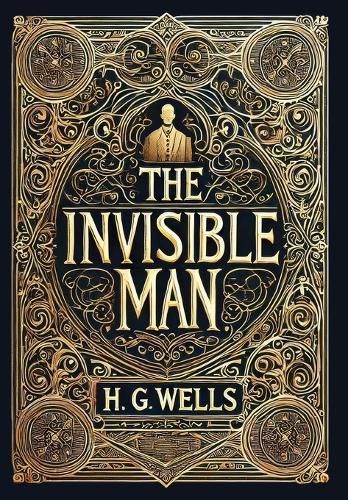
Collector's Edition Laminated Hardback with Jacket A stranger draped in bandages stumbles into a quiet English village, his face hidden, his temper volatile, and his secrets darker than anyone suspects. Whispers spread as bizarre events unfold-objects move on their own, footprints appear in the snow without a body to make them, and fear tightens its grip. The man, a scientist consumed by his own genius, has unlocked the terrifying power of invisibility, but control is slipping through his fingers. As paranoia and violence escalate, he finds himself hunted, forcing everyone to ask: if no one can see him, how can he ever be stopped? Blending science fiction with psychological horror, The Invisible Man by H. G. Wells revolutionized the genre by exploring the dangers of unchecked scientific ambition. Written in 1897, it captured the anxieties of a rapidly advancing world, where knowledge could be both a gift and a curse. The novel's chilling portrayal of isolation and power continues to influence literature, film, and discussions on ethics in science. More than a thrilling tale, it remains a stark warning about the consequences of pursuing power without restraint.
Full Product Details
Author: H G Wells
Publisher: Revive Classics
Imprint: Revive Classics
Dimensions:
Width: 15.20cm
, Height: 1.10cm
, Length: 22.90cm
Weight: 0.349kg
ISBN: 9781834120218
ISBN 10: 1834120217
Pages: 132
Publication Date: 08 April 2025
Audience:
General/trade
,
General
Format: Hardback
Publisher's Status: Active
Availability: Available To Order

We have confirmation that this item is in stock with the supplier. It will be ordered in for you and dispatched immediately.
Author Information
H.G. Wells, born on September 21, 1866, in Bromley, England, became one of the most influential English writers of the late 19th and early 20th centuries. Often referred to as the ""father of science fiction,"" his works like The War of the Worlds (1898) and The Time Machine (1895) introduced pioneering ideas about time travel, alien invasions, and humanity's future. His writings often tackled social issues, including class inequality, technology, and human progress, blending adventure with philosophical exploration.Wells studied biology at the Normal School of Science in London under Thomas Henry Huxley and worked as a teacher before turning to writing. His early novels were shaped by scientific advancements and often warned of the potential dangers of unchecked experimentation. Works like The Invisible Man (1897) and The Island of Doctor Moreau (1896) explored the moral and ethical consequences of science, while his utopian writings envisioned a more ideal future.Beyond fiction, Wells was an outspoken political activist, advocating for social reforms and global peace. He critiqued capitalism and imperialism in works like The Shape of Things to Come (1933), outlining his vision for a world government. Despite some political setbacks, Wells continued to shape literature and political thought, leaving a legacy that still influences science fiction and speculative writing today.