Overview
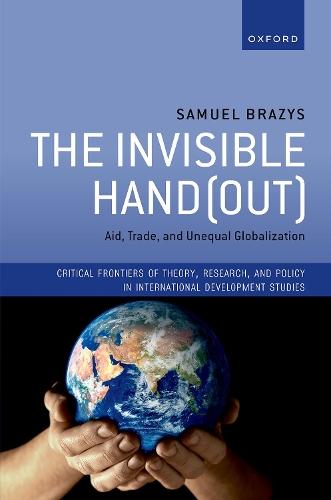
The Invisible Hand(out): Aid, Trade, and Unequal Globalization examines the relationship between foreign aid, market access, and economic growth in developing countries during the era of globalization. Despite the rapid integration of global markets lifting millions of people out of poverty, disparities remain, with some nations thriving while others falter. This book argues that explanations focusing solely on domestic governance and institutions, or geography, fall short in explaining these divergences. Instead, it highlights the critical role of external factors-specifically, the availability of trade-effective aid and the presence of meaningful market access opportunities. Drawing on extensive fieldwork and novel datasets, the book offers both quantitative and qualitative evidence in support of its arguments. Brazys considers a number of in-depth cases, including success stories Indonesia and Vietnam, where strategic aid and market access drove transformative growth, alongside cases including Madagascar and the Federated States of Micronesia, who have stagnated despite high overall levels of aid and de jure market access. With a focus on both economic data and the lived realities of development practitioners and exporters, The Invisible Hand(out) bridges theoretical insights and practical implications, offering policymakers, academics, and development professionals a fresh lens on addressing global inequality and fostering sustainable growth.
Full Product Details
Author: Samuel Brazys (Associate Professor, Associate Professor, School of Politics and International Relations University College Dublin)
Publisher: Oxford University Press
Imprint: Oxford University Press
Dimensions:
Width: 16.50cm
, Height: 2.30cm
, Length: 24.00cm
Weight: 0.583kg
ISBN: 9780198970439
ISBN 10: 0198970439
Pages: 288
Publication Date: 12 August 2025
Audience:
Professional and scholarly
,
College/higher education
,
Professional & Vocational
,
Postgraduate, Research & Scholarly
Format: Hardback
Publisher's Status: Active
Availability: To order

Stock availability from the supplier is unknown. We will order it for you and ship this item to you once it is received by us.
Reviews
Decisions about trade arrangements are often driven by political and security concerns, as are many decisions about aid. Therefore, aid may not result in export-led growth. Brazys gives examples from different countries to illustrate what has worked and what has not. He also makes the point that while governments determine trade and aid policy, firms do the exporting. This very detailed book shows the complexity of trade and aid, as well as their impact on a country's growth. * J. E. Weaver, CHOICE *
Author Information
Samuel Brazys is Associate Professor in the School of Politics and International Relations (SPIRe) and Vice-Principal of Research, Innovation and Impact in the College of Social Sciences and Law at University College Dublin. He is Editor of the Journal of International Development. He completed his PhD at Indiana University (IN, USA).