Overview
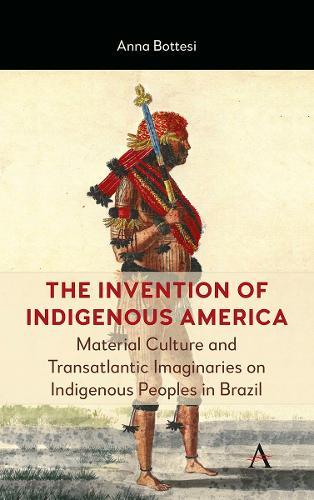
Explores the historical and semantic trajectories of artifacts from two Brazilian Indigenous groups, examining stereotypes and Indigenous communities' views on their heritage. The book presents recent research on the geographical, historical, and semantic trajectories of some artifacts belonging to two Brazilian Indigenous populations, but kept and exhibited in two ethnographic museums in Vienna and Lisbon. Located within the debate on the rethinking and decolonization of ethnographic collections and museums, its main objective is to investigate the role of material culture in the production of a stereotyped imaginary of the Amazonian Indigenous groups Kambeba and Munduruku. On one hand, it analyzes eighteenth-and nineteenth-century chronicles and illustrations produced by the naturalists who collected the objects in question; on the other hand, it pays attention to the perspectives of contemporary members of the local communities on such processes and on the ways in which their heritage has been and is being treated.
Full Product Details
Author: Anna Bottesi
Publisher: Anthem Press
Imprint: Anthem Press
Dimensions:
Width: 15.30cm
, Height: 1.80cm
, Length: 22.90cm
Weight: 0.489kg
ISBN: 9781839995736
ISBN 10: 1839995734
Pages: 236
Publication Date: 13 January 2026
Audience:
College/higher education
,
Postgraduate, Research & Scholarly
Format: Hardback
Publisher's Status: Active
Availability: Not yet available, will be POD

This item is yet to be released. You can pre-order this item and we will dispatch it to you upon it's release. This is a print on demand item which is still yet to be released.
Reviews
“In this important book, Anna Bottesi highlights the cultural and political significance of the many stories ethnographic museum objects can tell. Combining historical research with ethnographic fieldwork, she shows how Kambeba and Munduruku artefacts from Brazil – once collected and displayed to construct colonial imaginaries – can now spark conversations that place indigenous voices at the forefront.” —Davide Domenici, Department of History and Cultures, University of Bologna, Italy. “Bottesi’s work brings an insightful discussion about the problematic character of anthropological museums in terms of how they historically reproduced a colonial framework. The book promotes dialogues between historic and ethnographic sources and European and indigenous perspectives, breaking hierarchies of knowledge and critically engaging with the discussion about how problematic was(is) the invention of the Indigenous America.” —Dr. Vinicius Mariano de Carvalho, Reader in Brazilian and Latin American Studies, King’s College London, UK. “Bottesi’s book critically reflects on how European museums include Indigenous objects into narratives of alterity. Tensioning colonial views with contemporary Kambeba and Munduruku perspectives, she argues for the recognition of Indigenous epistemological authority as a tool for rethinking exhibitory as inclusive spaces. It is a recommended and transformative reading.” —Paride Bollettin, Assistant Professor, Department of Anthropology, Masaryk University, Czech Republic.
Author Information
Anna Bottesi is a post-doc researcher. She makes research on ethnographic collections and Indigenous peoples in Brazil.