Overview
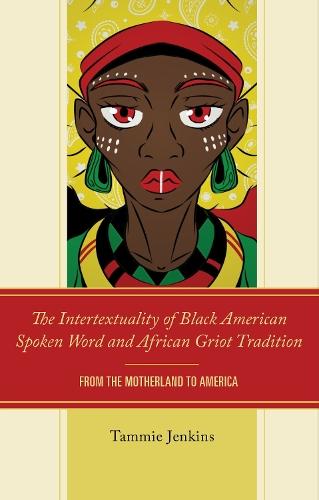
Griots in Africa are considered among the first spoken word poets, as they used this oral tradition to preserve their society’s cultural artifacts and traditions. These African oratory institutions underwent a transformative evolution during the Transatlantic Slave Trade, and in the New World, many displaced African-born people continued the griot tradition, expanding this practice to include their lived experiences and social realities; hence, modernizing spoken word poetry. The Intertextuality of Black American Spoken Word and African Griot Tradition: From the Motherland to America by Tammie Jenkins examines these relationships to show how spoken word poetry incorporates musical sampling to connect with historical events, politics, and African diasporic discourses from emancipation through the present. Using works by Meshell Ndegeocello and Ursula Rucker, Jenkins analyzes how they reimagine history, politics, and the arts to create counternarratives that challenge larger accepted social narratives. In doing so, their approach demonstrates how Black American spoken word poets communicate and build reciprocal relationships with their listening audiences across intersections of race, gender, class, and geography.
Full Product Details
Author: Tammie Jenkins
Publisher: Bloomsbury Publishing Plc
Imprint: Lexington Books
ISBN: 9781666933475
ISBN 10: 1666933473
Pages: 184
Publication Date: 15 January 2025
Audience:
Professional and scholarly
,
Professional & Vocational
Format: Hardback
Publisher's Status: Active
Availability: In Print

This item will be ordered in for you from one of our suppliers. Upon receipt, we will promptly dispatch it out to you. For in store availability, please contact us.
Reviews
Spoken word is a contemporary promotional term for the oral tradition that predates cave drawings. In The Intertextuality of Black American Spoken Word and African Griot Tradition: From the Motherland to America, independent scholar Tammie Jenkins sets the historical record straight by tracing the origins of Spoken Word from its African, oral, griot roots to its complicated literary landscapes dance on the page and stage, expanding such limited notions to include the music, a necessary aspect of such intertextual collage form. Jenkins notes the very real and timely peripatetic hybridity of Spoken Word as traditions of oral and scribed resistance and joy that connects us sonically to our shared humanity and our communal commonality. She also highlights how the interruption by the Atlantic Ocean gobbling griots in its Middle Passage, ensuing enslavement and requisite resistance is the essence of why we poet, speak our words, and razzle dazzle on the page and the stage. Her keen insights—and distinctions—are timely, necessary, and greatly needed in these precarious times. Dr. Jenkins, in this vital text and close study of artists Meshell Ndegeocello and Ursula Rucker, gives us our furious flowers back as we continue to play our music, spit our rhymes, kick the Willie Bobo and, as Sonia Sanchez would chant, Resist! Resist! Resist! Whether seminal semiotic, diasporic despotic, whenever Tammie Jenkins rocks the academic page, Nommo be there! -- Tony Medina, Howard University In this book, independent scholar Tammie Jenkins sets the historical record straight by tracing the origins of Spoken Word from its African, oral, griot roots to its complicated literary landscapes dance on the page and stage, expanding such limited notions to include the music, a necessary aspect of such intertextual collage form. Jenkins notes the very real and timely peripatetic hybridity of Spoken Word as traditions of oral and scribed resistance and joy that connects us sonically to our shared humanity and our communal commonality. She also highlights how the interruption by the Atlantic Ocean gobbling griots in its Middle Passage, ensuing enslavement and requisite resistance is the essence of why we poet, speak our words, and razzle dazzle on the page and the stage. Her keen insights—and distinctions—are timely, necessary, and greatly needed in these precarious times. -- Tony Medina, Howard University
Author Information
Tammie Jenkins, PhD, is an independent scholar of curriculum instruction.