Overview
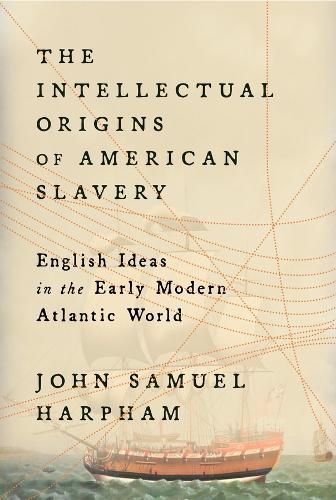
A landmark account of the origins of American slavery, revealing how ancient Roman ideas were used to defend the establishment of a slave empire in the English Atlantic world. The period from 1550 to 1700 was critical in the development of slavery across the English Atlantic world. During this time, English discourse about slavery revolved around one central question: How could free persons be made into slaves? John Samuel Harpham shows that English authors found answers to this question in a tradition of ideas that stretched back to the ancient world, where they were most powerfully expressed in Roman law. These ideas, in turn, became the basis for the earliest defenses of American slavery. The Roman tradition had located the main source of slavery in war: enslavement was the common fate of captives who otherwise faced execution. In early modern England, this account was incorporated into studies of the common law and influential natural rights theories by the likes of Hugo Grotius and John Locke. When Europeans started to publish firsthand accounts of Africa in the sixteenth century, these reports were thus received into a culture saturated with Roman ideas. Over time, English observers started to assert that the common customs of enslavement among the nations of Africa fit within the Roman model. Englishmen had initially expressed reluctance to take part in the Atlantic slave trade. But once assured that the slave trade could be traced back to customs they understood to be legitimate, they proved keen to profit from it. An eloquent account of the moral logic that propelled the development of an immoral institution, The Intellectual Origins of American Slavery reveals the power of an overlooked tradition of ideas in the history of human bondage.
Full Product Details
Author: John Samuel Harpham
Publisher: Harvard University Press
Imprint: Harvard University Press
Dimensions:
Width: 15.60cm
, Height: 2.50cm
, Length: 23.50cm
Weight: 0.735kg
ISBN: 9780674278370
ISBN 10: 0674278372
Pages: 368
Publication Date: 07 October 2025
Audience:
Professional and scholarly
,
College/higher education
,
Professional & Vocational
,
Postgraduate, Research & Scholarly
Format: Hardback
Publisher's Status: Active
Availability: Out of stock

The supplier is temporarily out of stock of this item. It will be ordered for you on backorder and shipped when it becomes available.
Reviews
Searing, unsettling, and strikingly original, The Intellectual Origins of American Slavery is the most ambitious account of slavery’s founding in the New World since the work of David Brion Davis half a century ago. With unflinching acuity and relying on breathtaking research, Harpham recounts the terrible story of how the English in America convinced themselves of the rightness of human bondage. -- Jill Lepore, author of <i>We the People: A History of the U.S. Constitution</i> Compelled by the desire to understand how human beings come to defend the indefensible, John Harpham turns to the early modern roots of Atlantic slavery in this perceptive intellectual history. The depth of his research and the boldness of his insights are certain to command attention. -- Drew Gilpin Faust, author of <i>This Republic of Suffering: Death and the American Civil War</i> This is the most extensive and compelling account of how the English came to persuade themselves that slavery could be both unnatural and yet legitimate, that some peoples had a right to freedom and others did not. No previous book has told this unsettling story in such depth and detail, or so clearly succeeded in demonstrating how it shaped both defenses of and struggles against slavery. -- Anthony Pagden, author of <i>Beyond States: Power, Peoples and Global Order</i> An outstanding accomplishment in intellectual history. With bracing clarity and moral force, John Harpham recovers a forgotten landscape of thought that rendered slavery not only conceivable but also morally permissible in the English-speaking world. Like David Brion Davis before him, Harpham writes with both scholarly precision and humanistic urgency. Luminous and unsettling, this is a foundational text for anyone who seeks to understand the origins of Anglo-American slavery. -- Orlando Patterson, author of <i>Enslavement: Past and Present</i>
Author Information
John Samuel Harpham is Lecturer on Social Studies at Harvard University.