Overview
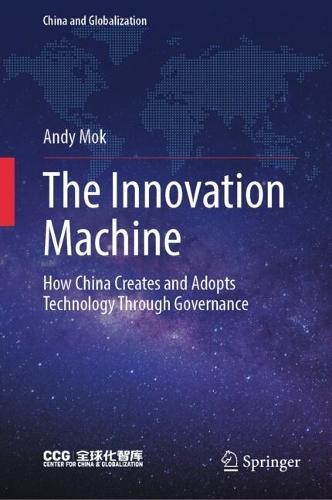
This book begins from a simple observation: innovation does not arise only from talent, capital, or competition, but also from the way a civilization understands order—and how it turns that understanding into policy, execution, and measurable results. In China, this chain is continuous. A cosmology built on relation and balance shapes the design of institutions; those institutions create the instruments and incentives that pull new technologies into use; and the results appear not as isolated breakthroughs but as systems that scale. Using China as the central case, the book traces this pattern from the Han Dynasty’s invention of paper to today’s AI systems and the Digital Yuan. The through-line is governance—not as bureaucracy, but as a framework that coordinates actors, aligns purpose, and accelerates diffusion. What matters most are the joints: where philosophy becomes policy, where policy becomes implementation, and where implementation becomes national capability. This is the I⁵ model in practice—ideas, institutions, instruments, infrastructure, impact—each layer shaping and reinforcing the next. Rather than treating China’s approach as an exception or as ideology, the book examines it as a structured method with deep historical roots and clear strategic logic. It shows how China uses institutional rivalry, state-backed demand creation, and long-horizon coordination to shorten development cycles and turn emergent technologies into societal systems—whether in the first imperial bureaucracy or in contemporary fields like artificial intelligence and digital finance. The analysis is both historical and forward-looking. It explains how governance can create demand for technologies that do not yet have markets, why China’s shifts between outward learning and self-reliance follow geopolitical necessity, and what these patterns reveal about the coming contests around AI, the Digital Yuan, and the wider digital economy. The lessons are practical: technological power is built at the interfaces, and those who can shape the joints between ideas and action will set the terms of global competition in the years ahead.
Full Product Details
Author: Andy Mok
Publisher: Springer Verlag, Singapore
Imprint: Springer Verlag, Singapore
ISBN: 9789819570553
ISBN 10: 9819570557
Pages: 235
Publication Date: 08 April 2026
Audience:
Professional and scholarly
,
Professional & Vocational
Format: Hardback
Publisher's Status: Active
Availability: Not yet available

This item is yet to be released. You can pre-order this item and we will dispatch it to you upon its release.
Author Information
Andy Mok is a professor at Beijing Foreign Studies University, a Senior Research Fellow at the Center for China and Globalization, and an industry mentor at Schwarzman College. A former RAND Corporation analyst and venture capitalist at Morningside Ventures, his work sits at the intersection of China’s innovation policies, AI, and global technology strategy. He holds an MBA from Wharton and an MA in China Studies from Johns Hopkins SAIS, where he received the Loe Fellowship for Excellence in China Studies. His insights appear in Bloomberg, CNBC, Al Jazeera, CGTN, Nikkei Asia, and the South China Morning Post.