Overview
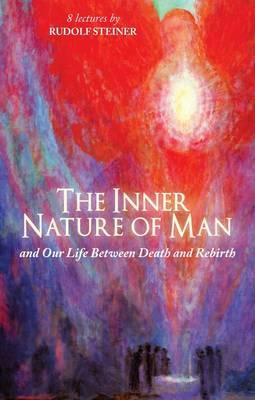
'When we know how to enter deeply into the realm of the soul, we reach understanding of the harmony that exists between successive lives on earth and the whole of the physical world outside us.' - Rudolf Steiner In these eight lectures, given during the Great War as thousands of young men were being killed in battle, Rudolf Steiner - the great initiate of the twentieth century - describes the dramatic reality of the spiritual worlds encountered by human beings after death. He speaks of the joys and sufferings experienced in those worlds by people of different character; the vision of the 'ideal human being' that souls experience; the cosmic 'midnight hour'; the processes leading to rebirth in the world of the senses; the deeper causes behind such phenomena as materialism and criminality; and why, in the flesh, we lose our instinctive perception of the spiritual worlds. Steiner describes how knowledge of the spiritual realms, as well as the life beyond death and before birth, can be built on the foundations of modern science. Indeed, he speaks of mankind's involvement in science and its many achievements as necessary steps on the path towards a modern spirituality and true understanding of the soul, and describes in detail some of the methods by which direct perception of the worlds of soul and spirit can be developed.
Full Product Details
Author: Rudolf Steiner ,
A. R. Meuss
Publisher: Rudolf Steiner Press
Imprint: Rudolf Steiner Press
Edition: Revised ed.
Dimensions:
Width: 14.00cm
, Height: 1.60cm
, Length: 21.60cm
ISBN: 9781855843783
ISBN 10: 1855843781
Pages: 174
Publication Date: 14 May 2013
Audience:
General/trade
,
General
Format: Paperback
Publisher's Status: Active
Availability: Available To Order

We have confirmation that this item is in stock with the supplier. It will be ordered in for you and dispatched immediately.
Language: English
Author Information
Rudolf Steiner (1861-1925) called his spiritual philosophy 'anthroposophy', meaning 'wisdom of the human being'. As a highly developed seer, he based his work on direct knowledge and perception of spiritual dimensions. He initiated a modern and universal 'science of spirit', accessible to anyone willing to exercise clear and unprejudiced thinking. spacer spacer From his spiritual investigations Steiner provided suggestions for the renewal of many activities, including education (both general and special), agriculture, medicine, economics, architecture, science, philosophy, religion and the arts. Today there are thousands of schools, clinics, farms and other organizations involved in practical work based on his principles. His many published works feature his research into the spiritual nature of the human being, the evolution of the world and humanity, and methods of personal development. Steiner wrote some 30 books and delivered over 6000 lectures across Europe. In 1924 he founded the General Anthroposophical Society, which today has branches throughout the world.