Overview
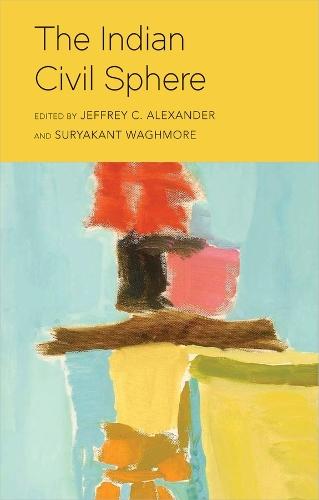
Indian democracy is in trouble. A still widely popular, democratically elected leader stands athwart it, dangerously authoritarian and disrespectful of civil liberties, the independence of the courts and the press, and disputatious vis-à-vis organized counter-powers. Leading intellectuals, Indian and Western, write about the death of Indian democracy and the passage to despotism. Despite these clear and present dangers, this volume suggests that the death of Indian democracy has been greatly exaggerated. To understand why, we must move beyond democracy narrowly understood as a governmental form to a broader theory of the cultural, associational, and institutional life necessary to sustain it. Building on the insights of civil sphere theory, this volume presents a complex understanding of the progress, reaction, and upheaval that has buffeted independent India. The vitality of India’s civil sphere nourished vast waves of anti-caste movements that energized Indian politics, creating civil repairs that brought it closer to its founding promise to become a less hierarchical society. Yet, the very success of these progressive movements triggered tsunamis of backlash reaction – Hindu revivalism, Muslim exclusion, horrific outbreaks of communal violence. Narendra Modi and the BJP rode these reactionary waves to power, but, as the 2024 election demonstrated, it is a power still hedged in by the continued vitality of India’s civil sphere. Despite pressures from big business and big government, print and digital media continue to broadcast powerful critical interpretations, speaking truth to power at critical junctures. The Indian legal order, despite enormous problems, continues to protect speech, association, the right to vote and the right to have those votes counted accurately. A powerful demonstration of both the richness of civil sphere theory and the vitality of Indian democracy, The Indian Civil Sphere will be of interest to students and scholars in sociology, politics and Asian studies and to anyone interested in the politics of the world’s largest democracy.
Full Product Details
Author: Jeffrey C. Alexander (University of California, Los Angeles) ,
Suryakant Waghmore
Publisher: John Wiley and Sons Ltd
Imprint: Polity Press
Weight: 0.680kg
ISBN: 9781509563814
ISBN 10: 1509563814
Pages: 280
Publication Date: 16 May 2025
Audience:
Professional and scholarly
,
Professional & Vocational
Format: Hardback
Publisher's Status: Active
Availability: Out of stock

The supplier is temporarily out of stock of this item. It will be ordered for you on backorder and shipped when it becomes available.
Author Information
JEFFREY C. ALEXANDER is Lillian Chavenson Saden Professor of Sociology at Yale University. SURYAKANT WAGHMORE is Professor in the Department of Humanities at IIT-Mumbai.