Overview
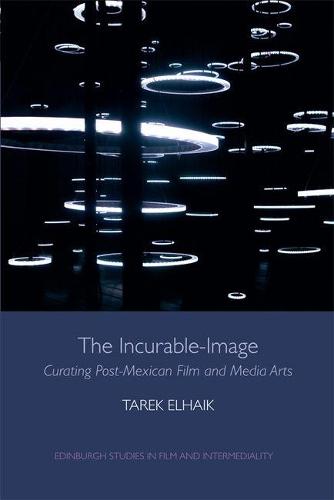
From the 1990s onwards the 'ethnographic turn in contemporary art' has generated intense dialogues between anthropologists, artists and curators. While ethnography has been both generously and problematically re-appropriated by the art world, curation has seldom caught the conceptual attention of anthropologists. Based on two years of participant-observation in Mexico City, Tarek Elhaik addresses this lacuna by examining the concept-work of curatorial platforms and media artists. Taking his cue from ongoing critiques of Mexicanist aesthetics, and what Roger Bartra calls 'the post-Mexican condition', Elhaik conceptualises curation less as an exhibition-oriented practice within a national culture, than as a figure of care and an image of thought animating a complex assemblage of inter-medial practices, from experimental cinema and installations to curatorial collaborations. Drawing on Gilles Deleuze and Paul Rabinow, the book introduces the concept of the 'Incurable-Image,' an antidote to our curatorial malaise and the ethical substance for a post-social anthropology of images.
Full Product Details
Author: Tarek Elhaik (Assistant Professor of Anthropology, University of California, Davis)
Publisher: Edinburgh University Press
Imprint: Edinburgh University Press
Dimensions:
Width: 15.60cm
, Height: 1.80cm
, Length: 23.40cm
Weight: 0.462kg
ISBN: 9781474403351
ISBN 10: 1474403352
Pages: 198
Publication Date: 12 February 2016
Audience:
General/trade
,
General
Format: Hardback
Publisher's Status: Active
Availability: Temporarily unavailable

The supplier advises that this item is temporarily unavailable. It will be ordered for you and placed on backorder. Once it does come back in stock, we will ship it out to you.
Reviews
This is a path-breaking book. Drawing on intensive and innovative participant-observation as well as a deep background in curatorial practice, Elhaik opens the way for a deterritorialization into new spaces and modes of thought and practice. As a result, the book takes the anthropological study of images beyond method into new sites of inquiry. -- Prof Paul Rabinow, University of California, Berkeley Tarek Elhaik's first book-an ethnographic examination of multi-media artists, curators, and fellow anthropologists loosely centered around Mexico City-is a bold, highly theoretical... sophisticated book, steeped in an eclectic blend of cutting-edge anthropology, continental philosophy, and contemporary art theory. -- Christopher Fraga, Somatosphere
This is a path-breaking book. Drawing on intensive and innovative participant-observation as well as a deep background in curatorial practice, Elhaik opens the way for a deterritorialization into new spaces and modes of thought and practice. As a result, the book takes the anthropological study of images beyond method into new sites of inquiry. -- Prof Paul Rabinow, University of California, Berkeley For those tired of preachy and essentialist accounts of anthropologists and artists as handmaidens to other people's authentic, bare culture, Tarek Elhaik's book will be a shot in the arm. Elhaik agues that anthropology and art, by succumbing to the trope of radical alterity, have lost their speculative edge, while the international art market renders their sincere efforts irrelevant. His vivid and mordant analysis of the dramatic power dynamics of rivalry, complicity, contamination, and diagnosis among artists, curators, and anthropologists in Mexico will stimulate all who seek a bold new understanding of art-anthropology relations. -- Prof Laura Marks, Simon Fraser University
This is a path-breaking book. Drawing on intensive and innovative participant-observation as well as a deep background in curatorial practice, Elhaik opens the way for a deterritorialization into new spaces and modes of thought and practice. As a result, the book takes the anthropological study of images beyond method into new sites of inquiry. -- Prof Paul Rabinow, University of California, Berkeley
Author Information
Tarek Elhaik is assistant professor of Anthropology at the University of California, Davis and a film curator. His writings have appeared in books and journals and he has curated several programs and symposia on avant-garde cinema from Latin America and the Arab World. He is also part of a collaborative team of researchers, hosted by the Los Angeles Film Forum and funded by the Getty Foundation, currently curating an anthology and various platforms on experimental media in Latin America.