Overview
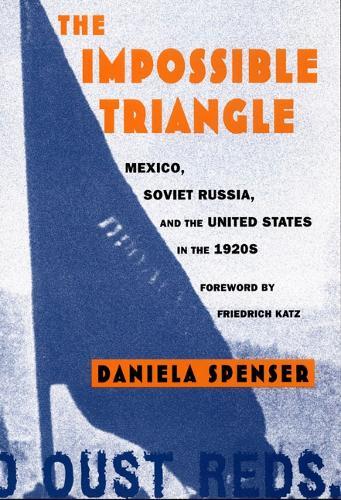
During the 1920s, Mexico was caught in a diplomatic struggle between the ideologies of two strong states. In ""The Impossible Triangle"" Daniela Spenser explores the tangled relationship between Russia and Mexico in the years following their own dramatic revolutions, as well as the role played by the United States during this turbulent period. Bringing together Mexican, Soviet and North American (as well as British) perspectives, Spenser shows how the convergence of each country's domestic and foreign policies precluded them from a harmonious triangular relationship. Based on documents from the archives of several nations, the book analyzes the Mexican government's motivation for establishing relations with the Soviet Union in the face of continued imperialist pressure and harsh opposition from the United States. Spenser explores how, despite US objections to Mexico's relations with the Soviet Union, Mexico continued its association with the Soviets until the United States adopted the Good Neighbour Policy and softened its stance toward Mexico's revolutionary programme after 1927. With a foreword by Friedrich Katz and illustrated by illuminating photographs, ""The Impossible Triangle"" contributes to an understanding of the international dimension of the Mexican revolution. It should interest students and scholars of history, revolutionary theory, political science, diplomacy and international relations.
Full Product Details
Author: Daniela Spenser ,
Friedrich Katz
Publisher: Duke University Press
Imprint: Duke University Press
Weight: 0.721kg
ISBN: 9780822322566
ISBN 10: 0822322560
Pages: 280
Publication Date: 03 February 1999
Audience:
Professional and scholarly
,
Professional & Vocational
Format: Hardback
Publisher's Status: Active
Availability: In Print

This item will be ordered in for you from one of our suppliers. Upon receipt, we will promptly dispatch it out to you. For in store availability, please contact us.
Reviews
""Revolutions in Mexico and Russia shook the world in the second decade of the twentieth century, yet, while many authors have compared them, none until now has pondered their subsequent diplomatic interplay. The ""impossible triangle"" of Daniela Spenser's title describes the relations between Mexico, Russia and the anti-Revolutionary United States ... Spenser uses material from various archives, including that of the Central Party in Moscow, to reconstruct the (mis)perceptions held by a wide range of political players.""--Times Literary Supplement, 31 December, 1999 ""The Impossible Triangle documents a comedy of errors that tells us how, in similar unforeseen situations, before pursuing reality, every diplomacy pursues its own phantoms."" Adolfo Gilly, Universidad Nacional Autonoma de Mexico ""The Impossible Triangle succeeds on many levels, but perhaps none more than in its innovative trilateral approach. The Mexico that emerges from Spenser's narrative is both object-of the unequal struggle for influence between the United States and the Soviet Union-and subject, capable of dealing with these two 'courtiers' on its own terms. This engagingly-told story reminds us of the radical contingencies thrown up by the Bolshevik Revolution and how that revolution permanently altered the conduct of international relations."" Lewis Siegelbaum, Michigan State University
Revolutions in Mexico and Russia shook the world in the second decade of the twentieth century, yet, while many authors have compared them, none until now has pondered their subsequent diplomatic interplay. The impossible triangle of Daniela Spenser's title describes the relations between Mexico, Russia and the anti-Revolutionary United States ... Spenser uses material from various archives, including that of the Central Party in Moscow, to reconstruct the (mis)perceptions held by a wide range of political players. --Times Literary Supplement, 31 December, 1999 The Impossible Triangle documents a comedy of errors that tells us how, in similar unforeseen situations, before pursuing reality, every diplomacy pursues its own phantoms. Adolfo Gilly, Universidad Nacional Autonoma de Mexico The Impossible Triangle succeeds on many levels, but perhaps none more than in its innovative trilateral approach. The Mexico that emerges from Spenser's narrative is both object-of the unequal struggle for influence between the United States and the Soviet Union-and subject, capable of dealing with these two 'courtiers' on its own terms. This engagingly-told story reminds us of the radical contingencies thrown up by the Bolshevik Revolution and how that revolution permanently altered the conduct of international relations. Lewis Siegelbaum, Michigan State University
Author Information
Daniela Spenser is a Fellow at Centro de Investigaciones y Estudios Superiores en AntropologÍa Social in Mexico City.