|
|
|||
|
||||
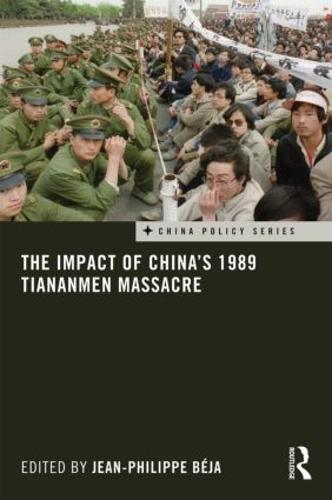
OverviewFull Product DetailsAuthor: Jean-Philippe Béja (CNRS (Centre national de la recherche scientifique), Paris, France)Publisher: Taylor & Francis Ltd Imprint: Routledge Dimensions: Width: 15.60cm , Height: 1.80cm , Length: 23.40cm Weight: 0.680kg ISBN: 9780415578721ISBN 10: 0415578728 Pages: 280 Publication Date: 09 November 2010 Audience: College/higher education , Tertiary & Higher Education Format: Hardback Publisher's Status: Active Availability: In Print This item will be ordered in for you from one of our suppliers. Upon receipt, we will promptly dispatch it out to you. For in store availability, please contact us. Table of ContentsIntroduction: June 4th 1989: A Watershed in Chinese Contemporary History 1. June Fourth: Memory and Ethics 2. The Chinese Communist Party and 4 June 1989 —Or how to get out of it and get away with it 3. The Impact of the June 4th Massacre on the pro-Democracy Movement 4. The Chinese Liberal Camp in Post-June 4th China 5. Wang Xiaobo and the No Longer Silent majority 6. The Seeds of Tiananmen: Reflections on a Growing Chinese Civil Rights Movement 7. The practice of law as conscientious resistance: Chinese weiquan lawyers’ experience 8. The Politicisation of China's Law-Enforcement and Judicial Apparatus 9. The Enduring Importance of Police Repression: Laojiao, the Rule of Law and Taiwan’s Alternative Evolution 10. The Impact of the Tiananmen Crisis on China’s Economic Transition 11. The Tiananmen Incident and the Pro-Democracy Movement in Hong Kong 12. How China managed to de-isolate itself on the international stage and re-engage the world after Tiananmen 13. China and International Human Rights: Tiananmen’s Paradoxical Impact 14. A Shadow over Western Democracies: China’s Political Use of Economic PowerReviewsAuthor InformationCNRS (Centre national de la recherche scientifique), Paris, France Tab Content 6Author Website:Countries AvailableAll regions |
||||