|
|
|||
|
||||
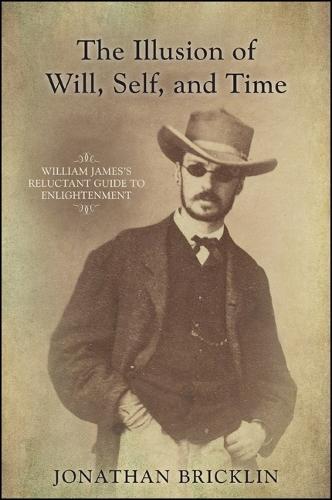
OverviewDiscusses how William James's work suggests a world without will, self, or time and how research supports this perspective. Full Product DetailsAuthor: Jonathan BricklinPublisher: State University of New York Press Imprint: State University of New York Press Dimensions: Width: 15.20cm , Height: 2.50cm , Length: 22.90cm Weight: 0.689kg ISBN: 9781438456270ISBN 10: 1438456271 Pages: 402 Publication Date: 01 June 2015 Audience: General/trade , College/higher education , Professional and scholarly , General , Tertiary & Higher Education Format: Hardback Publisher's Status: Active Availability: In Print This item will be ordered in for you from one of our suppliers. Upon receipt, we will promptly dispatch it out to you. For in store availability, please contact us. Table of ContentsPreface Acknowledgments 1. William James: A Guide for the Perplexed 2. Thoughts without a Thinker 3. Ghostbuster 4. The Feeling of Effort 5. Free Will and Indeterminism 6. Universe and Nulliverse 7. Precognition 8. Fate and Free Will 9. That Thou Art 10. Consciousness and Consciousness of Self 11. Psyche 12. Undoing unto Others As Well as Oneself 13. Belief in Fate Is not Fatalism 14. The Nonreality of Time 15. Eternalism Appendix Abbreviations for James Texts Notes Bibliography IndexReviewsWe are taken step by step in a stunning tour of many powerful yet still disputed ideas that were fervently argued a century ago. Congratulations to Jonathan for a book that every psychologist should read whether doubtful of current paradigms or searching for new ones but mostly, for an enriching experience that brings these age-old controversies into relation with findings in modern physics and psychology. - Jason W. Brown, MD, Center for Cognition and Communication We are taken step by step in a stunning tour of many powerful yet still disputed ideas that were fervently argued a century ago. Congratulations to Jonathan for a book that every psychologist should read whether doubtful of current paradigms or searching for new ones but mostly, for an enriching experience that brings these age-old controversies into relation with findings in modern physics and psychology. - Jason W. Brown, MD, Center for Cognition and Communication Despite all the interest in James the scholar and James the man, there remains an absence of highly readable books that bring some of the most colorful aspects of James' own thought, along with his somewhat mercurial personal character, to the modern reader. Bricklin's book does remarkable service in this vein, collecting many aspects of James' thought around the general theme of free will, a question that James struggled with his whole life, and which penetrated many dimensions of his thought. - Allan Combs Author InformationJonathan Bricklin is a Program Director at the New York Open Center and the editor of Sciousness. Tab Content 6Author Website:Countries AvailableAll regions |
||||