|
|
|||
|
||||
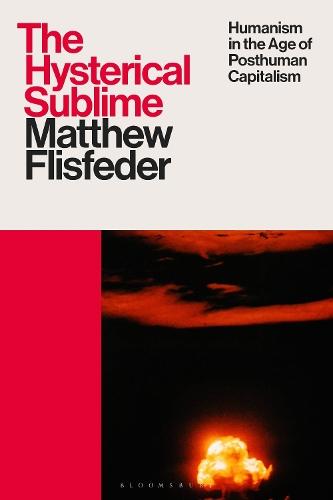
OverviewFull Product DetailsAuthor: Matthew Flisfeder (University of Winnipeg, Canada)Publisher: Bloomsbury Publishing PLC Imprint: Bloomsbury Academic Dimensions: Width: 16.20cm , Height: 2.20cm , Length: 23.60cm Weight: 0.540kg ISBN: 9781350536104ISBN 10: 1350536105 Pages: 264 Publication Date: 24 July 2025 Audience: Professional and scholarly , Professional & Vocational Format: Hardback Publisher's Status: Active Availability: Available To Order We have confirmation that this item is in stock with the supplier. It will be ordered in for you and dispatched immediately. Table of ContentsReviewsOur period is one of crisis. Against the growing hegemony of posthumanism as the ideology of twenty-first century capitalism, Matthew Flisfeder disrupts our received wisdoms about our time by showing how dialectical humanism can better conceptualize our understanding of the present. The Hysterical Sublime is an essential theoretical intervention which everyone must read * Agon Hamza, Co-author of Reading Hegel (2021) * Flisfeder’s book is the rare case of a work which appears at the right moment doing the right thing. The Hysterical Sublime conclusively demonstrates that the ongoing global crisis of the Anthropocene is at its most fundamental not just an economic or social crisis but a properly metaphysical crisis centering on the very core human subjectivity: it is not enough just do what is required from us, we have to rethink the entire frame of our posthuman situation in order to arrive at an adequate cognitive mapping of our predicament in 21st century capitalism. And what better way to do this than to begin with Flisfeder’s magnificent book! * Slavoj Žižek, author of Zero Point (2025), Against Progress (2024) and Christian Atheism (2024), all published by Bloomsbury * Author InformationMATTHEW FLISFEDER is a Professor of Rhetoric and Communications at The University of Winnipeg, Canada. He is the author of Algorithmic Desire: Toward a New Structuralist Theory of Social Media (2021), Postmodern Theory and Blade Runner (2017), and The Symbolic, The Sublime, and Slavoj Žižek’s Theory of Film (2012). He is also the co-editor of Žižek and Media Studies: A Reader (2014). Tab Content 6Author Website:Countries AvailableAll regions |
||||