|
|
|||
|
||||
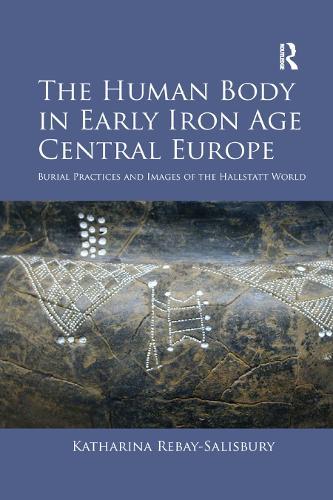
OverviewIdentities and social relations are fundamental elements of societies. To approach these topics from a new and different angle, this study takes the human body as the focal point of investigation. It tracks changing identities of early Iron Age people in central Europe through body-related practices: the treatment of the body after death and human representations in art. The human remains themselves provide information on biological parameters of life, such as sex, biological age, and health status. Objects associated with the body in the grave and funerary practices give further insights on how people of the early Iron Age understood life and death, themselves, and their place in the world. Representations of the human body appear in a variety of different materials, forms, and contexts, ranging from ceramic figurines to images on bronze buckets. Rather than focussing on their narrative content, human images are here interpreted as visualising and mediating identity. The analysis of how image elements were connected reveals networks of social relations that connect central Europe to the Mediterranean. Body ideals, nudity, sex and gender, aging, and many other aspects of women’s and men’s lives feature in this book. Archaeological evidence for marriage and motherhood, war, and everyday life is brought together to paint a vivid picture of the past. Full Product DetailsAuthor: Katharina Rebay-SalisburyPublisher: Taylor & Francis Ltd Imprint: Routledge Weight: 0.680kg ISBN: 9780367880590ISBN 10: 0367880598 Pages: 318 Publication Date: 30 June 2020 Audience: College/higher education , General/trade , Tertiary & Higher Education , General Format: Paperback Publisher's Status: Active Availability: In Print This item will be ordered in for you from one of our suppliers. Upon receipt, we will promptly dispatch it out to you. For in store availability, please contact us. Table of ContentsPreface Introduction Theoretical Framework The Iron Age Setting Funerary Practices and the Body The Representation of the Body: Images and Imagined Worlds The Image and the Object The Hallstatt Body in Life and Death Motif networks Conclusion List of sites included in the analysis BibliographyReviewsAuthor InformationKatharina Rebay-Salisbury received her PhD in prehistoric archaeology from the University of Vienna (Austria) in 2005 and subsequently worked as a researcher at the Universities of Cambridge and Leicester (both UK). Her research within the Leverhulme Trust funded project 'Tracing Networks’ centred on studying human representations, identities, and social relations in the late Bronze and Iron Age of central Europe. She currently investigates motherhood in prehistoric Europe at the Austrian Academy of Sciences (Austria). Tab Content 6Author Website:Countries AvailableAll regions |
||||