Overview
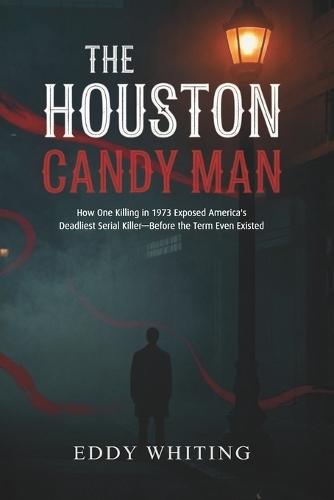
Before the FBI coined the term ""serial killer,"" one man's horrific crimes would change criminal investigation forever. Between 1970 and 1973, at least twenty-eight teenage boys vanished from the streets of Houston, Texas. Their families filed missing persons reports. Police dismissed them as runaways. No one connected the disappearances-until a single gunshot on an August night in 1973 revealed the unthinkable truth. Dean Arnold Corll, known to neighbors as ""The Candy Man"" for his family's confectionery business, had been systematically torturing and murdering young men for three years. But this wasn't a crime that law enforcement had words for yet. The FBI's Behavioral Science Unit hadn't formalized the concept of ""serial murder."" No databases tracked patterns across jurisdictions. Investigators had no framework, no profile, no precedent for what they were uncovering in boat sheds and buried on remote beaches. The Houston Mass Murders would become a watershed moment in American criminal justice-but for the families of the victims, it was just the beginning of a decades-long wait for answers. The Houston Candy Man takes readers into the heart of one of America's most disturbing criminal cases, examining not just the murders themselves, but the world that allowed them to happen. Through meticulous research and compelling narrative, this investigation explores: - The killer's evolution - How a seemingly ordinary businessman became one of history's most prolific murderers - The accomplice dynamic - The psychological manipulation of two teenage boys, Elmer Wayne Henley and David Owen Brooks, who helped lure victims to their deaths - The victims forgotten - The young men dismissed as runaways, whose disappearances were never seriously investigated until it was too late - The investigation that changed everything - How detectives worked without the tools, terminology, or training that would later become standard in serial murder cases - The forensic breakthrough - How modern DNA technology and forensic anthropology brought closure to families four decades after their sons vanished This is investigative journalism at its most powerful-a story that spans from the gritty streets of 1970s Houston to cutting-edge forensic laboratories of today. It's a chronicle of victims who deserved better, families who never gave up, and the scientists who refused to let these boys remain nameless. Dean Corll's crimes predated our understanding of serial murder. The forensic anthropologists who finally identified his victims represent the best of modern criminal science. Together, their stories reveal how far we've come-and how much further we still need to go. The Houston Candy Man offers a haunting examination of evil, the evolution of criminal investigation, and the relentless pursuit of justice that refuses to accept that some victims will never have names. Their names mattered. Their stories matter. This is how we finally brought them home.
Full Product Details
Author: Eddy Whiting
Publisher: Independently Published
Imprint: Independently Published
Dimensions:
Width: 15.20cm
, Height: 1.70cm
, Length: 22.90cm
Weight: 0.426kg
ISBN: 9798272099204
Pages: 318
Publication Date: 29 October 2025
Audience:
General/trade
,
General
Format: Paperback
Publisher's Status: Active
Availability: Available To Order

We have confirmation that this item is in stock with the supplier. It will be ordered in for you and dispatched immediately.