Overview
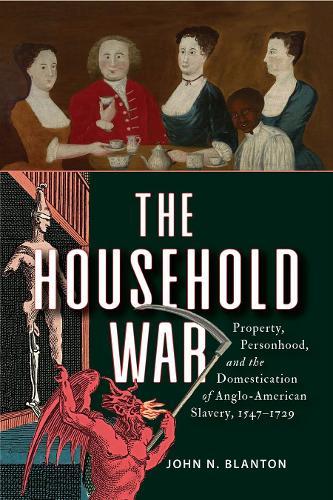
A bold reinterpretation of perennial debates over the origins and development of slavery in colonial English North America The Household War offers a bold reinterpretation of perennial debates over the origins and development of slavery in colonial English North America. John N. Blanton argues that the law and practice of slavery in the empire's earliest American colonies were shaped by a tension between two competing definitions of the institution. One strand of thought, war-slavery ideology, claimed that the power of life and death transformed war captives into chattel slaves. The power to kill defined both war and slavery. But bringing war captives into enslavers' private households was a dangerous proposition, and so a parallel ""domestication"" ideology emerged calling for limitations on the power of enslavers and the recognition of the enslaved as persons held to labor in a variant of English servitude. The Household War examines how the tensions between war-slavery and domestication ideologies, along with crucial political, economic, and cultural differences, shaped the development of slavery in Virginia and Massachusetts from their founding through 1729, creating distinct systems of bondage in England's flagship mainland colonies. In Massachusetts, where a diversified and dynamic commercial economy afforded opportunities for mobility and access to material resources, the dominance of domestication ideology enabled enslaved people to negotiate their bondage, attain free status, and build free Black households and communities. Virginia, however, committed itself to war-slavery early in its development, with enslaved people defined as articles of property subject to enslavers' power of life and death while the extreme inequality of plantation society made free Black household formation nearly impossible. Long before American independence highlighted their differences, then, Massachusetts and Virginia were already on distinct trajectories, laying the foundation for a future house divided on the question of slavery.
Full Product Details
Author: John N. Blanton
Publisher: University of Pennsylvania Press
Imprint: University of Pennsylvania Press
ISBN: 9781512828306
ISBN 10: 1512828300
Pages: 400
Publication Date: 04 November 2025
Audience:
Professional and scholarly
,
College/higher education
,
Professional & Vocational
,
Postgraduate, Research & Scholarly
Format: Hardback
Publisher's Status: Active
Availability: Out of stock

The supplier is temporarily out of stock of this item. It will be ordered for you on backorder and shipped when it becomes available.
Reviews
""In The Household War, John H. Blanton explores nothing less than the origins and legitimation of American slavery. In the process, he touches on an impressive array of subjects, from the rise of capitalism in England to the origins of American slavery to English legal culture to slavery's abolition. This book represents a monumental achievement and is sure to be required reading in both graduate and undergraduate seminars on early American historiography, slavery, and American capitalism.""-- ""Christopher Cameron, author of To Plead Our Own Cause: African Americans in Massachusetts and the Making of the Antislavery Movement"" ""This important, rigorously argued book takes slavery seriously as an intimate relationship that also structured empires. John H. Blanton argues that enslavers and enslaved people made, contested, and ultimately unmade slavery at the level of the household. Students and scholars of Atlantic slavery will find The Household War necessary and transformative reading.""-- ""Rebecca Anne Goetz, author of The Baptism of Early Virginia: How Christianity Created Race""
Author Information
John N. Blanton is Assistant Professor of History at City College of New York.