Overview
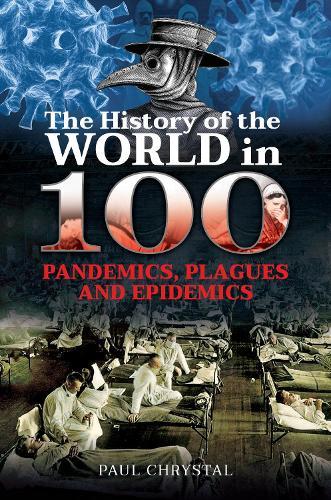
This revelatory book charts and explains the impact and consequences of successive pandemics, plagues and epidemics on the course of world history - all through the lens of today's ongoing global experience of COVID 19. Ranging from prehistory to the present day, it first defines what constitutes a pandemic or epidemic then looks at 20 guilty diseases: including cholera, influenza, bubonic plague, leprosy, measles, smallpox, malaria, AIDS, MERS, SARS, Zika, Ebola and, of course, Covid-19. Some less well-known, but equally significant and deadly contagions such as Legionnaires' Disease, psittacosis, polio, the Sweat, and dancing plague, are also covered. The book is ordered chronologically. Each chapter features an explanation and description of epidemiology, sources and vectors, morbidity, mortality, governmental response and reaction, societal response and impact as well as psychological issues where known - and the political, legal and scientific consequences it had or has for each locus at a local and international level. In short - the book explains how each of the events both made and influenced subsequent history in its own way, particularly how each shaped future medical and scientific research and vaccine development programmes. It also examines myths about infectious diseases, the role of the media and social media. Perhaps most importantly, Paul Chrystal asks what lessons have been learnt. Will we be better prepared next time? Because, if one thing is sure, there is going to be a 'next time'. AUTHOR: Paul Chrystal is the author of some seventy books published over the last decade, including recent publications such as Wars and Battles of the Roman Republic, Roman Military Disasters and Women and War in Ancient Greece and Rome. He is a regular contributor to history magazines, local and national newspapers and has appeared on BBC Radio 4, BBC World Service and on BBC local radio throughout Yorkshire and in Teesside and Manchester. He writes extensively for several Pen & Sword military history series including 'Cold War 1945-1991', 'A History of Terror' and 'Military Legacy' (of British cities). 20 colour illustrations
Full Product Details
Author: Paul Chrystal
Publisher: Pen & Sword Books Ltd
Imprint: Pen & Sword History
ISBN: 9781399005425
ISBN 10: 1399005421
Pages: 320
Publication Date: 11 August 2021
Audience:
General/trade
,
General
Format: Hardback
Publisher's Status: Active
Availability: In Print

This item will be ordered in for you from one of our suppliers. Upon receipt, we will promptly dispatch it out to you. For in store availability, please contact us.
Reviews
Timely, topical, informative, exceptionally well written and impressively presented, The History of the World in 100 Pandemics, Plagues and Epidemics is a strongly recommended addition to community, college, and university library World History and Health/Medicine collections. -- Midwest Book Review
Author Information
Paul Chrystal attended the Universities of Hull and Southampton where he took degrees in Classics. For the next thirty-five years he worked in medical publishing, much of the time as an international sales director while latterly creating medical educational and global marketing programmes for the pharmaceutical industry. Since then he has been history advisor to local visitor attractions such as the National Trust in York, and writing features for national newspapers, and broadcasting on BBC local radio, the Radio 4 PM programme and on the BBC World Service. He is a contributor to a number of history and archaeology magazines and the author of over 120 books published since 2010 on a wide range of subjects; he is a regular reviewer for and contributor to ‘Classics for All’, editorial advisor for Yale University Press and a contributor to the Classics section of ‘Bibliographies on Line’ published by Oxford University Press. In 2019 he was guest speaker for Vassar College New York’s London Programme in association with Goldsmith University.