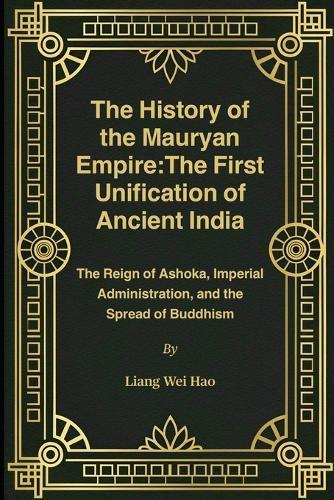
The History of the Mauryan Empire: The First Unification of Ancient India: The Reign of Ashoka, Imperial Administration, and the Spread of Buddhism

Author:   Liang Wei Hao
Publisher:   Independently Published
ISBN:  

9798270029722


Pages:   110
Publication Date:   15 October 2025
Format:   Paperback
Availability:   Available To Order   Availability explained
We have confirmation that this item is in stock with the supplier. It will be ordered in for you and dispatched immediately.

Our Price $36.93 Quantity:  
Add to Cart

Share |

The History of the Mauryan Empire: The First Unification of Ancient India: The Reign of Ashoka, Imperial Administration, and the Spread of Buddhism


Overview

Discover the story of how a great empire brought together a divided land for the first time. This book explains the beginning of this empire, starting from a time when many separate kingdoms fought constantly for power. You will learn how a young leader and his wise advisor created a new system of government that would change the region forever. Their ideas on how to rule and manage a country became the foundation for everything that followed. The book then explores the life of a famous emperor, whose early years were spent expanding his territory through war. A single, terrible battle caused him to change his ways completely. He turned away from violence and developed a new philosophy based on peace and good conduct. He had his ideas carved onto stones and pillars across the land so everyone could learn from them. These messages encouraged people to be respectful, kind, and to live together in harmony. Next, you will see how the empire was managed day-to-day. It had a strong central government with the emperor at its head, supported by a large group of officials. These officials collected taxes, maintained order, and managed the economy, which was supported by a powerful army and busy trade routes. The capital city was the heart of the empire, a bustling center of administration and commerce, filled with grand buildings and public works. The empire also had a rich cultural and religious life. The famous emperor was a great supporter of a peaceful religion and sent messengers to spread its teachings to other countries. At the same time, he promoted respect for all other belief systems. The art and architecture from this period are famous for their beautiful polish and symbolic carvings, particularly the lion pillars that have become a modern national symbol. Finally, the book details the reasons for the empire's decline, explaining how financial strain and weak leadership led to its end, and reflects on the lasting mark it left on history, providing a model for future governments.

Full Product Details

Author:   Liang Wei Hao
Publisher:   Independently Published
Imprint:   Independently Published
Dimensions:   Width: 15.20cm , Height: 0.60cm , Length: 22.90cm
Weight:   0.159kg
ISBN:  

9798270029722


Pages:   110
Publication Date:   15 October 2025
Audience:   General/trade ,  General
Format:   Paperback
Publisher's Status:   Active
Availability:   Available To Order   Availability explained
We have confirmation that this item is in stock with the supplier. It will be ordered in for you and dispatched immediately.

Table of Contents

Reviews

Author Information

Tab Content 6

Author Website:  

Countries Available

All regions
Latest Reading Guide

April RG 26_2


Shopping Cart
Your cart is empty
Shopping cart
Mailing List