|
|
|||
|
||||
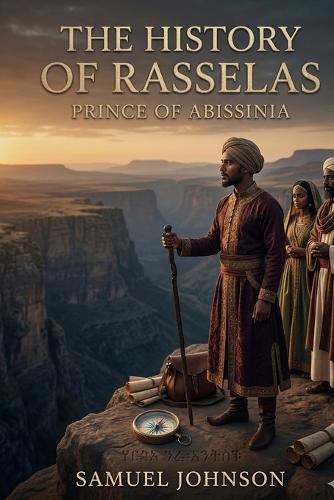
OverviewRasselas is a fable-like story, more apologue than novel, written by Johnson in 1759 to help pay for the costs of his recently-deceased mother's funeral. While the plot is basic and the characters are thin, the work is an important philosophical piece exploring whether or not humanity can attain happiness.Rasselas, an Abyssinian prince, travels with his sister Nekayah, her handmaiden Pekuah, and the wise poet Imlac-a proxy for Johnson himself. Their exploration of happiness and the meaning of leading a happy life is a complex and subtle one, though the work ends with ""nothing concluded."" Johnson leaves the reader to ponder: Can an individual ever attain happiness in any meaningful sense? Rasselas, philosophical romance by Samuel Johnson published in 1759 as The Prince of Abissinia. Supposedly written in the space of a week, with the impending expenses of Johnson's mother's funeral in mind, Rasselas explores and exposes the vanity of the human search for happiness. The work is addressed to those who ""listen with credulity to the whispers of fancy and pursue with eagerness the phantoms of hope."" Hoping to learn how he should live, Rasselas meets with men of varied occupations and interests-scholars, astronomers, shepherds, hermits, and poets-and explores their manner of life. He finds that complete happiness is elusive and that ""while you are making the choice of life, you neglect to live""-which is, perhaps, the most important moral to be drawn from the tale. Full Product DetailsAuthor: Samuel JohnsonPublisher: Les Prairies Numeriques Imprint: Les Prairies Numeriques Dimensions: Width: 15.20cm , Height: 1.00cm , Length: 22.90cm Weight: 0.227kg ISBN: 9791043137532Pages: 164 Publication Date: 01 March 2026 Audience: General/trade , General Format: Paperback Publisher's Status: Active Availability: Available To Order We have confirmation that this item is in stock with the supplier. It will be ordered in for you and dispatched immediately. Table of ContentsReviewsRasselas is a fable-like story, more apologue than novel, written by Johnson in 1759 to help pay for the costs of his recently-deceased mother's funeral. While the plot is basic and the characters are thin, the work is an important philosophical piece exploring whether or not humanity can attain happiness.Rasselas, an Abyssinian prince, travels with his sister Nekayah, her handmaiden Pekuah, and the wise poet Imlac-a proxy for Johnson himself. Their exploration of happiness and the meaning of leading a happy life is a complex and subtle one, though the work ends with ""nothing concluded."" Johnson leaves the reader to ponder: Can an individual ever attain happiness in any meaningful sense? Author InformationTab Content 6Author Website:Countries AvailableAll regions |
||||