|
|
|||
|
||||
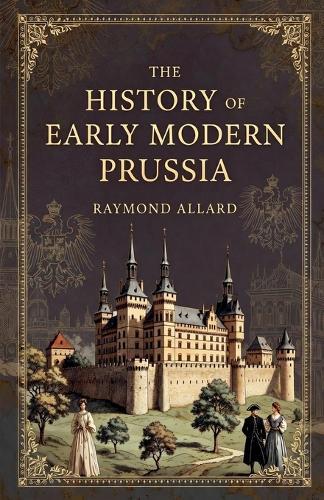
OverviewFew states in European history have provoked such polarized interpretation as Prussia. To some, it has been the archetype of disciplined, enlightened absolutism that demonstrated how a small, resource-poor territory could rise to great-power status through administrative efficiency, military innovation, and calculated diplomacy. To others, it has appeared as the cradle of an authoritarian political culture whose emphasis on obedience, hierarchy, and militarized governance prefigured darker trajectories in modern European history. This book seeks neither to celebrate nor to condemn, but to understand-historically and without anachronism-the emergence of Brandenburg-Prussia as a major European actor between the secularization of the Teutonic Order in 1525 and the death of Frederick the Great in 1786. The temporal frame adopted here is deliberate. It begins with the transformation of the Teutonic Order's Prussian territory into a secular Lutheran duchy under Polish suzerainty, an act that severed the region from the crusading tradition of the Middle Ages and opened it to Reformation-era state-building. It concludes with the death of Frederick II, whose reign saw Prussia achieve formal recognition as one of the five great powers of Europe, a status confirmed by survival in the Seven Years' War (1756-1763) and sealed by participation in the partitions of Poland (1772, 1793, 1795) Full Product DetailsAuthor: Raymond AllardPublisher: Colloquium Verlag Imprint: Colloquium Verlag Dimensions: Width: 14.00cm , Height: 1.30cm , Length: 21.60cm Weight: 0.277kg ISBN: 9798233538919Pages: 236 Publication Date: 24 January 2026 Audience: General/trade , General Format: Paperback Publisher's Status: Active Availability: Available To Order We have confirmation that this item is in stock with the supplier. It will be ordered in for you and dispatched immediately. Table of ContentsReviewsAuthor InformationTab Content 6Author Website:Countries AvailableAll regions |
||||