Overview
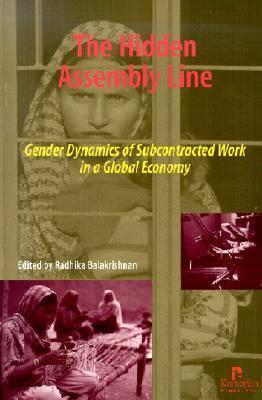
An exploration of how current globalizing economic trends impact on the lives of women workers in Asia, looking specifically at the dynamics and growth of subcontracted labor. The contributors explore the impact of subcontracted work in different national settings, making links to the global economy, and to household level changes in women's financial security and work opportunities. They present case studies from Pakistan, the Philippines, Sri Lanka and India, and explore the implications for women's empowerment and changing social relations of production. For scholars, students and researchers interested in women's roles in economic development and in a globalizing world economy. An exploration of how current globalizing economic trends impact on the lives of women workers in Asia, looking specifically at the dynamics and growth of subcontracted labor. Case studies from Pakistan, the Philippines, Sri Lanka and India connect global economic change in labor and production to household level changes in women's financial security and work opportunities. The international contributors consider these changes from the point of view of women's empowerment and changing social relations of production. For scholars, students and researchers interested in women's roles in economic development and in a globalizing world economy.
Full Product Details
Author: Radhika Balakrishnan
Publisher: Kumarian Press
Imprint: Kumarian Press
Dimensions:
Width: 15.30cm
, Height: 1.00cm
, Length: 23.00cm
Weight: 0.240kg
ISBN: 9781565491397
ISBN 10: 1565491394
Pages: 240
Publication Date: 30 November 2001
Audience:
College/higher education
,
Professional and scholarly
,
Undergraduate
,
Postgraduate, Research & Scholarly
Format: Paperback
Publisher's Status: Active
Availability: In Print

This item will be ordered in for you from one of our suppliers. Upon receipt, we will promptly dispatch it out to you. For in store availability, please contact us.
Reviews
A refreshing contribution to the growing debate about the changing nature of work in the global economy. Rather than home-workers been seen as marginal, at the edges of current economic change, they are place right at the center. Furthermore they are presented not only as key economic players but also as human beings whose quality of life is at stake. This in no way detracts from the theoretical and empirical quality of the analysis. The ease with which the narrative moves from macroeconomic analysis to the daily lives of real women is perhaps the book's greatest achievement. Of great interest to social activists and theorists alike...it is a valuable addition to the growing literature on globalization, precisely because it focuses on a sorely neglected area: labor. The book s accessibility is a great strength. The economic arguments are rigorous enough to satisfy and persuade trained economists, while the clear prose makes it appropriate and open enough for undergraduates.
"""A refreshing contribution to the growing debate about the changing nature of work in the global economy. Rather than home-workers been seen as marginal, at the edges of current economic change, they are place right at the center. Furthermore they are presented not only as key economic players but also as human beings whose quality of life is at stake. This in no way detracts from the theoretical and empirical quality of the analysis. The ease with which the narrative moves from macroeconomic analysis to the daily lives of real women is perhaps the book's greatest achievement."" ""Of great interest to social activists and theorists alike...it is a valuable addition to the growing literature on globalization, precisely because it focuses on a sorely neglected area: labor."" ""The book s accessibility is a great strength. The economic arguments are rigorous enough to satisfy and persuade trained economists, while the clear prose makes it appropriate and open enough for undergraduates."""
Author Information
Radhika Balakrishnan has a Ph.D. in Economics from Rutgers University and is an associate professor of Economics at Marymount Manhattan College. Namrata Bali is the Secretary of Sewa (Self Employed Women's Association), a registered Trade Union of informal sector women workers with a membership of 2,018,000 women in India.