|
|
|||
|
||||
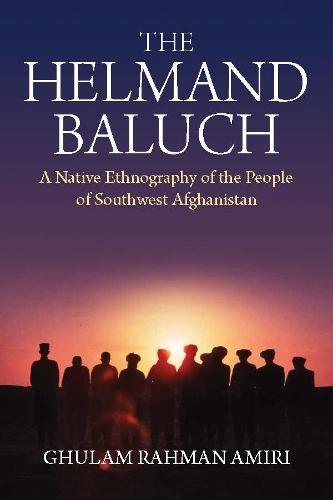
OverviewFull Product DetailsAuthor: Ghulam Rahman Amiri , William B. Trousdale , Mitchell Allen , Mitchell AllenPublisher: Berghahn Books Imprint: Berghahn Books ISBN: 9781800730427ISBN 10: 180073042 Pages: 264 Publication Date: 01 November 2020 Audience: Professional and scholarly , Professional & Vocational , Postgraduate, Research & Scholarly Format: Hardback Publisher's Status: Active Availability: In Print This item will be ordered in for you from one of our suppliers. Upon receipt, we will promptly dispatch it out to you. For in store availability, please contact us. Table of ContentsList of Illustrations Editors' Foreword William B. Trousdale and Mitchell Allen Note on Translation and Transliteration William B. Trousdale About the Author Babrak Amiri About the Editors Preface Introduction Chapter 1. History of Sistan Chapter 2. Geography of the Helmand Basin Chapter 3. Agricultural and Pastoral Production Chapter 4. Crafts, Trade, and Travel Chapter 5. Labor and Family Relationships Chapter 6. Education, Health, Religion, and Cultural Norms Conclusions Afterword: The Helmand Baluch and Native Ethnography Mitchell Allen Appendix A: Tribes of the Lower Helmand Valley Appendix B: Climate Data from Zaranj and Deshu Meteorological Station Appendix C: Monthly Water Flows at Charburjak Station Glossary References IndexReviewsThe Helmand-Sistan region is one of the most inaccessible parts of Afghanistan, a country noted for its remoteness even at the best of times. The Baluch of Afghanistan, furthermore, are one of the least studied ethnic groups in Afghanistan. This makes the work of the late Ghulam Rahman Amiri a major breakthrough. Not only does it make available a wealth of original data otherwise unavailable, it is the first study of an ethnic group in Afghanistan from the perspective of a native of that country. It comes therefore without the intellectual baggage and theories that so many western ethnographers might bring to their subjects. Amiri's book is all the more valuable therefore, as much for its perspective as for the huge wealth of raw material made available to the scholarly world for the first time. * Warwick Ball, Independent Scholar, editor of Afghanistan Journal and author of The Archeological Gazetteer of Afghanistan Amiri's book is a true gift. Wonderfully comprehensive in its scope and detail, it brings Sistan and its people to life, covering a remarkably broad range of topics. All students and scholars of Afghanistan will need to have it on their shelves. * Thomas J. Barfield, Boston University and President, American Institute of Afghanistan Studies Author InformationGhulam Rahman Amiri, a historian at Kabul University, served as Director of the Training Center for the Department of Civil Aviation of Afghanistan and was then an academic member of the Kabul Museum. After the Soviet invasion of 1979, he was elevated to the role of Minister of Tourism for Afghanistan. Several years later, he ran afoul of government policies, was jailed, then forced to flee to India. Amiri eventually emigrated to Denmark, where he passed away from Lou Gehrig's disease (ALS) in 2003. Tab Content 6Author Website:Countries AvailableAll regions |
||||