Overview
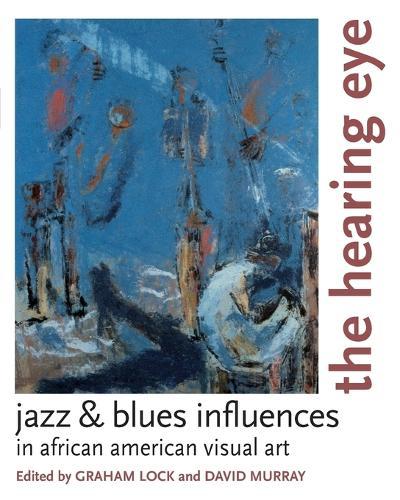
The widespread presence of jazz and blues in African American visual art has long been overlooked. The Hearing Eye makes the case for recognizing the music's importance, both as formal template and as explicit subject matter. Moving on from the use of iconic musical figures and motifs in Harlem Renaissance art, this groundbreaking collection explores the more allusive - and elusive - references to jazz and blues in a wide range of mostly contemporary visual artists. There are scholarly essays on the painters Rose Piper (Graham Lock), Norman Lewis (Sara Wood), Bob Thompson (Richard H. King), Romare Bearden (Robert G. O'Meally, Johannes Völz) and Jean-Michel Basquiat (Robert Farris Thompson), as well an account of early blues advertising art (Paul Oliver) and a discussion of the photographs of Roy DeCarava (Richard Ings). These essays are interspersed with a series of in-depth interviews by Graham Lock, who talks to quilter Michael Cummings and painters Sam Middleton, Wadsworth Jarrell, Joe Overstreet and Ellen Banks about their musical inspirations, and also looks at art's reciprocal effect on music in conversation with saxophonists Marty Ehrlich and Jane Ira Bloom. With numerous illustrations both in the book and on its companion website, The Hearing Eye reaffirms the significance of a fascinating and dynamic aspect of African American visual art that has been too long neglected.
Full Product Details
Author: Graham Lock , David Murray
Publisher: Oxford University Press Inc
Imprint: Oxford University Press Inc
Dimensions:
Width: 25.10cm
, Height: 2.30cm
, Length: 20.10cm
Weight: 1.361kg
ISBN: 9780195340518
ISBN 10: 0195340515
Pages: 384
Publication Date: 29 January 2009
Audience:
General/trade
,
General
Format: Paperback
Publisher's Status: Active
Availability: To order 
Stock availability from the supplier is unknown. We will order it for you and ship this item to you once it is received by us.
Table of Contents
"i 1: Paul Oliver: ""Selling that Stuff"": Advertising Art and Early Blues on 78s 2: Graham Lock: Blues on the Brush: Rose Piper's Blues and Negro Folk Songs Paintings of the 1940s ii 3: Michael Cummings: Stitching in Tempo. Interview iii 4: Sara Wood: ""Pure Eye Music"": Norman Lewis, Abstract Expressionism, and Bebop 5: Sam Middleton: The Painter as Improvising Soloist. Interview 6: Richard H. King: The Enigma of Bob Thompson 7: Wadsworth Jarrell and AFRICOBRA: Sheets of Color, Sheets of Sound. Interview iv 8: Robert O'Meally: ""We Used to Say 'Stashed'"": Romare Bearden Paints the Blues 9: Johannes Völz: ""Blues and the Abstract Truth."" Or, Did Romare Bearden Really Paint Jazz? v 10: Joe Overstreet: Light in Darkness. Interview 11: Robert Farris Thompson: Royalty, Heroism, and the Streets: The Art of Jean-Michel Basquiat 12: Ellen Banks: The Geometries of the Score. Interview vi 13: Richard Ings: ""And You Slip into the Breaks and Look Around"": Jazz and Everyday Life in the Photographs of Roy DeCarava vii 14: A Jackson in the House (Musicians Talk Painters). Interview i. Marty Ehrlich on Oliver Jackson ii. Jane Ira Bloom on Jackson Pollock"
Reviews
highly readable Roger Thomas, Jazz UK
highly readable * Roger Thomas, Jazz UK *
The volume features many attractive plates, supplemented by additional artwork and relevant musical tracks available on the press website. The book makes a convincing case that these artists share much common ground with jazz, particularly in reference to racial politics, a propensity for improvisation and the high value placed on developing a distinctive 'personal' voice. --AllAboutJazz.com The Hearing Eye is a fine example of the new jazz studies: by connecting jazz to the other arts in its first century of existence, it broadens our understanding of improvisation, and takes us deeper into the heart of the creative moment. The book's editors and writers have gone a long way towards restoring African Americans and their music to their proper place in the history of world modernism. --John Szwed, Professor of Music and Jazz Studies, Columbia University Long overdue, this imaginative collection reveals more evidence of the Africanized nature of the modern world - where visual artists sing the blues and create, nourished by Ma Rainey, Chano Pozo and Chasin' the Trane. --Val Wilmer, historian and photographer, Author of As Serious as Your Life: The Story of the New Jazz and The Face of Black Music: Photographs by Valerie Wilmer The Hearing Eye is a dazzling achievement. It offers an exhilarating collage of seductions and provocations addressed to the confluence of musical and visual forms in African American culture. Neither field will ever be quite the same after this. --Paul Gilroy, Anthony Giddens Professor of Social Theory, Sociology Department, London School of Economics Highly readable and will fascinate anyone intrigued by where jazz goes when it steps outside music. --Jazz UK Deftly blending interviews with visual artists and musicians with astute critiques by scholars of music and art, The Hearing Eye helps us see how we have been impoverished by the conventions of disciplinary specialization in the academy that encourage us to separate the study of music from the study of visual art...The Hearing Eye advances our understanding of both music and art. It addresses successfully relationships that many people have noticed, but few have attempted to codify and theorize. It is a greatly needed book. --George Lipsitz, Journal of American Studies
Author Information
Graham Lock is a freelance writer, Special Lecturer in American Music, University of Nottingham, and author, Forces in Motion: Anthony Braxton and the Meta-reality of Creative Music (Quartet, 1988), Chasing the Vibration: Meetings with Creative Musicians (Stride, 1994), and Blutopia: Visions of the Future and Revisions of the Past in the Work of Sun Ra, Duke Ellington and Anthony Braxton (Duke, 1999), and editor, Mixtery: A Festschrift for Anthony Braxton (Stride, 1995). David Murray is Professor of American Studies, University of Nottingham, and author, Indian Giving: Economies of Power in Early Indian-White Exchanges (Massachusetts UP, 2000), Forked Tongues: Speech, Writing and Representation in North American Indian Texts (Indiana UP, 1992), and Matter, Magic and Spirit: Representing Indian and African American Belief (Pennsylvania UP, 2007).
Tab Content 6
Author Website:
Countries Available
All regions
|