Overview
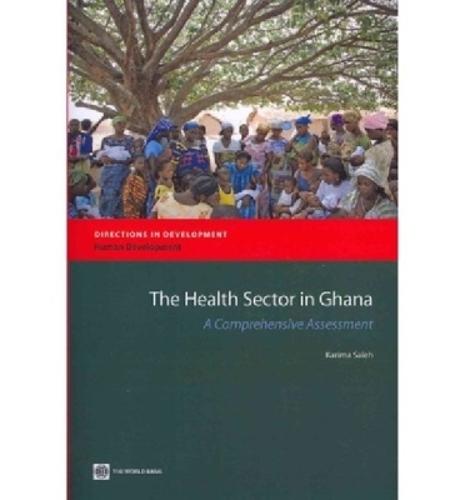
Ghana’s demographic profile is changing, and demographic, epidemiological, and nutrition transitions are well underway. However, several of Ghana’s health outcome performances, especially in terms of child health and maternal health, are worse than the levels found in other comparable lower middle income and health spending countries. The volume is timely, given the stage of the Ghana's development. It briefly discusses some of the debates in Ghana’s health sector: decentralization and governance, private sector partnership, strengthening health systems, and health financing. It brings together several elements of health system development and challenges and links it to health financing and delivery performance. The volume reviews the situation among human resources for health and pharmaceuticals. The private sector is growing and attention is required on its development. The volume benefits from health service delivery assessments in the public and private sectors, and finds large variations in distribution and weak incentives to improve productivity and performance. It also reviews the demand side financing reform, its coverage of the population and its effect on service use and the financial sustainability of the National Health Insurance Scheme. There is fragmentation in financing of public health, and inefficiency in health spending, and there is need to improve spending in areas that provide a higher value for money. Data overall has been a constraint, however, the study benefits from various household level surveys to disaggregate the analysis by income quintiles. It also reviews the household’s vulnerability to health shocks and their financial protection against illness costs. There is inequity in health access, health service use, and health outcomes. The Northern regions have poorer results. Finally, the volume highlights the range of policy options needed to improve health system performance and health outcomes. At this stage of the country’s development, and taking the agenda for reform to the next level, the Government of Ghana could embark on significant reforms in the areas of (a) decentralization and governance, (b) health service delivery, (c) public health, and (d) health financing. Further it should set up a holistic and accountable health reform process as it transitions to universal coverage along with its concomitant service delivery, public health, and governance reforms.
Full Product Details
Author: Karima Saleh
Publisher: World Bank Publications
Imprint: World Bank Publications
Dimensions:
Width: 15.10cm
, Height: 1.20cm
, Length: 22.90cm
Weight: 0.300kg
ISBN: 9780821395998
ISBN 10: 0821395998
Pages: 225
Publication Date: 30 December 2012
Audience:
Professional and scholarly
,
Professional & Vocational
Format: Paperback
Publisher's Status: Active
Availability: In Print

This item will be ordered in for you from one of our suppliers. Upon receipt, we will promptly dispatch it out to you. For in store availability, please contact us.