|
|
|||
|
||||
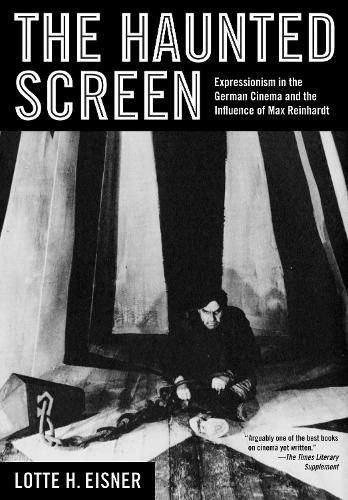
OverviewThe Golden Age of German cinema began at the end of the First World War and ended shortly after the coming of sound. From The Cabinet of Dr. Caligari onwards the principal films of this period were characterized by two influences: literary Expressionism, and the innovations of the theatre directors of this period, in particular Max Reinhardt. This book demonstrates the connection between German Romanticism and the cinema through Expressionist writings. It discusses the influence of the theatre: the handling of crowds; the use of different levels, and of selective lighting on a predominately dark stage; the reliance on formalized gesture; the innovation of the intimate theatre. Against this background the principal films of the period are examined in detail. The author explains the key critical concepts of the time, and surveys not only the work of the great directors, such as Fritz Lang and F. W. Murnau, but also the contribution of their writers, cameramen, and designers. As The Times Literary Supplement wrote, 'Mme. Eisner is first and foremost a film critic, and one of the best in the world. She has all the necessary gifts.' And it described the original French edition of this book as 'one of the very few classics of writing on the film and arguably the best book on the cinema yet written.' Full Product DetailsAuthor: Lotte H. Eisner , Roger GreavesPublisher: University of California Press Imprint: University of California Press Edition: 2nd Revised edition Dimensions: Width: 14.60cm , Height: 2.50cm , Length: 21.00cm Weight: 0.454kg ISBN: 9780520257900ISBN 10: 0520257901 Pages: 360 Publication Date: 29 September 2008 Audience: College/higher education , Undergraduate Format: Paperback Publisher's Status: Active Availability: Available To Order We have confirmation that this item is in stock with the supplier. It will be ordered in for you and dispatched immediately. Table of ContentsForeword to the English language edition 1 The Predisposition towards Expressionism 2 The Beginnings of the Expressionist Film The Cabinet of Dr Caligari; Genuine; Von Morgens bis Mitternachts; Torgus; Raskolnikow 3 The Spell of Light: the Influence of Max Reinhardt The Student of Prague (1913); Max Reinhardt; The Go/em (1920); Die Chronik Pon Grieshuus; Vanina; Carl Boese on the special effects for The Go/em 4 Lubitsch and the Costume Film !vfadame Dubarry; Sumurun; Anna Boleyn; Danton; Othello; Pola Negri 5 The Stylized Fantastic Der Miide Tod 6 The Symphonies of Horror Nosferatu; the demoniac bourgeois; the sway of the Doppelgiinger 7 'Decorative* Expressionism Waxworks; the concept of space; the obsession with corridors and staircases; Paul Leni on set designing 8 The World of Shadows and Mirrors Warning Shadows; the Expressionist actor 9 Studio Architecture and Landscape Die Nibelungen; geometric grouping 10 The Expressionist Debut of a 'Realistic' Director Der Schatz 11 Kammerspielfilm and Stimmung Hintertreppe; Scherben; Sylvester; Paul Czinner; Elisabeth Bergner; Stimmung 12 Murnau and the Kammerspielfilm The Last Laugh; the mobile camera 13 The Handling of Crowds Metropolis; the influence of the Expressionist choruses and Piscator 14 The Fritz Lang Thriller Die Spinnen; Dr Mabuse der Spieler; Spione; Die Frau im Mond 15 Tragedies of the Street Die Strasse; The joyless Street; Asta Nielsen; Dirnentragiidie; the Absolute film; Asphalt 16 The Evolution of the Costume Film Tartuffe 17 The Eye of the Camera in E.A. Dupont Das Alte Gesetz; Variety 18 The Climax of the Chiaroscuro Faust 19 Pabst and the Miracle of Louise Brooks Pandora's Box; Diary of a Lost Girl; Censorship and Pabst's realism 20 The Decline of the German Film The coming of sound; Die Dreigroschenoper; M; Das Testament des Dr Mabuse; Miidchen in Uniform; the Ufa style; Leni Riefenstahl; the post-Nazi era Appendix: The Dreigroschenoper Lawsuit Principal Works Mentioned in the Text Selective Filmography, 1913-33 Index Sources of IllustrationsReviewsArguably one of the best books on cinema yet written. * Times Literary Supplement * A sumptuous meal for those interested in the dark and brooding days of German cinema. * Cinema Journal * Author InformationFilm critic, poet, and historian Lotte H. Eisner (1896-1983) was Chief Archivist for the French Cinematheque and a member of the French Legion d'honneur. Tab Content 6Author Website:Countries AvailableAll regions |
||||