Overview
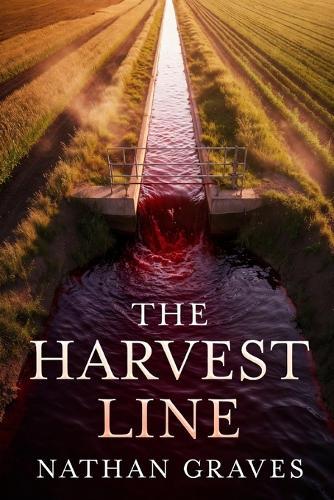
The water runs red in Mercer's Bend, and no one seems troubled by it. Dr. Maya Chen arrives in this impossibly prosperous California town to investigate agricultural contamination, expecting science to explain what her eyes tell her is wrong. What she finds instead is a community that shouldn't exist, eight hundred people thriving in conditions that have bankrupted every neighboring farm, their crops legendary, their fields fertile beyond any rational explanation. The town welcomes her with the practiced warmth of people who have nothing to hide. They give her full access to their records, their land, their carefully maintained systems. They answer every question with the patience of those who have explained themselves many times before. And slowly, methodically, Maya begins to understand that the horror of Mercer's Bend isn't that it hides its secrets, but that it has learned to dress murder in the language of necessity so completely that even those who witness it struggle to name what they've seen. For a century, this community has sustained itself through ritual sacrifice. They select the vulnerable, drifters, runaways, those without family or connection, and integrate them with genuine kindness. They offer belonging to people desperate for it. And then, with medical precision and bureaucratic efficiency, they kill them to feed the land that feeds the nation. When Maya documents the death of a young man named James Ko, livestreaming his murder to millions of viewers, she believes exposure will force accountability. Instead, she learns that horror made visible is not horror stopped. That systems built on blood protect themselves not through conspiracy but through the simple fact that prosperity makes people willing to rationalize almost anything. That witness without institutional power is just another form of watching while the world chooses not to act. THE HARVEST LINE is a novel about complicity, the complicity of communities that decide some lives matter less, of systems that benefit from violence they refuse to acknowledge, of individuals who see clearly but lack the power to change what they witness. It explores what happens when kindness becomes mechanism, when belonging transforms into trap, when the mathematics of survival reduce human life to acceptable cost. As Maya watches the town select its next victim, she must navigate the space between powerless witness and destructive action. She must decide whether documentation matters when no one will act on what's documented, whether preserving the names of the dead serves any purpose beyond carrying their weight, whether stopping one horror justifies the collapse of a community that has built everything on its terrible foundation. This is literary horror grounded in psychological realism, a story about agricultural systems, moral witness, and the ways humans rationalize the consumption of the vulnerable when their prosperity depends on it. It asks uncomfortable questions about the violence embedded in the structures we depend on, the complicity of choosing not to investigate what sustains us, and the cost of refusing to look away when everyone else has agreed that looking away is easier. The horror here is not supernatural but systemic. Not individual evil but collective rationalization. Not hidden in shadows but functioning in plain sight, dressed in the language of tradition and necessity and difficult choices that someone has to make. THE HARVEST LINE asks: How many communities thrive on violence they've learned to ignore? How many systems sustain themselves on blood they've learned to hide? And what happens when someone refuses to participate in that collective amnesia, even when refusal means professional destruction, personal isolation, and the weight of witness that changes nothing except the one carrying it?
Full Product Details
Author: Nathan Graves
Publisher: Independently Published
Imprint: Independently Published
Dimensions:
Width: 15.20cm
, Height: 1.90cm
, Length: 22.90cm
Weight: 0.490kg
ISBN: 9798275948271
Pages: 368
Publication Date: 24 November 2025
Audience:
General/trade
,
General
Format: Paperback
Publisher's Status: Active
Availability: Available To Order

We have confirmation that this item is in stock with the supplier. It will be ordered in for you and dispatched immediately.