Overview
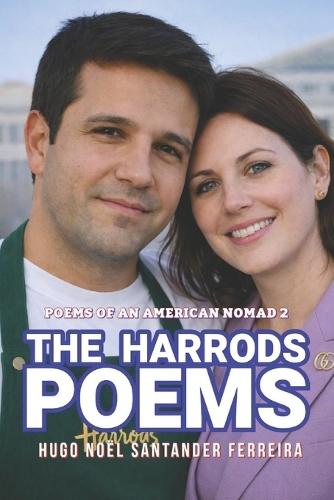
The Harrods Poems occupy the experiential core of the book. Harrods is the emblem of the working world: a space where commerce, beauty, discipline, surveillance, desire, and sustained human effort converge. In its corridors, storerooms, and demanding rhythms, the poet develops an attentive gaze that observes in depth the functioning of the system and the condition of those who sustain it with their bodies, their time, and their watchfulness. This poetry arises from an awakened consciousness, formed in direct experience as a warehouse supervisor, and expressed with aesthetic and ethical rigour. Work becomes knowledge, and knowledge becomes poetic memory. This book affirms that dignity belongs to the human being as essence. The job function, the uniform, the shift, the wage, daily repetition, and surveillance are integrated into a broader vision in which consciousness, culture, and sensitivity constitute the true centre. Everyday work is revealed as a space of inner learning, and writing as an exercise of fidelity to one's own life. The body appears as the place where contemporary history is inscribed, and poetry preserves that inscription as conscious testimony. In Cane Fields Varnished with Concrete, the poet traces a moral geography of the urban world. The modern city appears as a territory of memory and affection, where love, loss, and hope coexist with asphalt. The poem declares: Today I walked the ruined streets of this city that still bears our wound, seeking in corners and façades the joy that, in your embrace, was my torch Memory is a territory conquered by the word. London is configured as a new Carthage, a centre of consumption and a stage for historical learning. The imperial city is integrated into a symbolic reading that links past and present, affection and structure, body and architecture. Its streets, parks, libraries, theatres, and rhythms accompany an inner process in which walking, working, reading, and remembering form one and the same creative gesture. The subtitle Poems of an American Nomad 2 expresses the architecture of this work. The number two indicates continuity, maturity, and an expansion of consciousness. The first volume traced an initial cartography of the continent; this second integrates exile, migrant labour, dialogue among civilisations, and spiritual reflection as central dimensions of his journeys across the world, in which Bucaramanga flickers like Baghdad in Sinbad's Travels from The Thousand and One Nights. Both volumes share a single ethic, a single voice, and the same integrative vocation. Together they form one poetic organism in which movement becomes form and experience becomes knowledge. This book affirms human dignity as an essential value, honest labour as a space of inner formation, culture as a living dialogue among traditions, and the word as a form of embodied truth. The Harrods Poems: Poems of an American Nomad 2 thus opens as threshold and map. It invites the reader to travel through a work of universal scope that understands poetry as a path, as an exercise of consciousness, and as an act of human integration. In these pages, the word becomes home, memory becomes form, and the journey becomes meaning.
Full Product Details
Author: Hugo Noël Santander Ferreira
Publisher: Independently Published
Imprint: Independently Published
Dimensions:
Width: 15.20cm
, Height: 0.70cm
, Length: 22.90cm
Weight: 0.186kg
ISBN: 9798245788999
Pages: 132
Publication Date: 27 January 2026
Audience:
General/trade
,
General
Format: Paperback
Publisher's Status: Active
Availability: Available To Order

We have confirmation that this item is in stock with the supplier. It will be ordered in for you and dispatched immediately.