Awards
- Winner of American Academy of Religion: Best First Book in the History of Religions 2002.
- Winner of American Academy of Religion: Best First Book in the History of Religions 2004 (United States)
- Winner of American Academy of Religion: Best First Book in the History of Religions 2004.
Overview
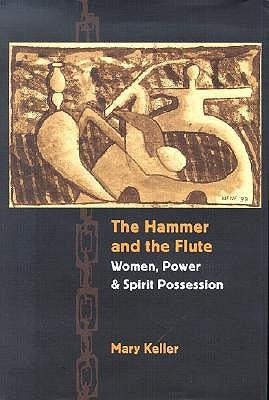
The possession of the body - particularly the body of a woman -by spirits, deities and ancestors is a phenomenon common to a number of religions. Ethnographers have often studied cases of spirit possession to decode a society's cultural values and belief systems. However, Mary Keller approaches the spirit possession of women as a historian of religion informed by postcolonial theory and feminist philosophy, challenging the prevalent interpretation that possessed women are victims of psychological disturbance or are actively manipulating their audiences. Proposing a new theoretical framework, ""instrumental agency"", Keller offers a far more nuanced portrait of spirit possession, as a negotiation with multiple kinds of power which requires a radical receptivity on the part of the possessed persons and a reorientation of scholarship. For Keller, the possessed woman is at once ""hammer"" and ""flute"", paradoxically powerful because she has become an instrument of the overpowering will of an ancestor, deity or spirit. Keller applies the concept of instrumental agency to case studies, providing a new interpretation of each. She begins with contemporary possessions in Malaysia, where women in manufacturing plants were seized by spirits seeking to resacralize the territory. She next looks to wartime Zimbabwe, where female spirit mediums, the ""Nehanda mhondoro"", declared the ancestors' will to fight against colonialism. Finally she provides a rereading of the performative power of possession by interpreting two plays, Euripides' ""Bacchae"" and S.Y. Ansky's ""The Dybbuk"", which feature possessed women as central characters.
Full Product Details
Author: Mary Keller
Publisher: Johns Hopkins University Press
Imprint: Johns Hopkins University Press
Dimensions:
Width: 15.20cm
, Height: 2.60cm
, Length: 22.90cm
Weight: 0.567kg
ISBN: 9780801867873
ISBN 10: 0801867878
Pages: 304
Publication Date: 22 March 2002
Recommended Age: From 17
Audience:
Professional and scholarly
,
Professional and scholarly
,
Professional & Vocational
,
Postgraduate, Research & Scholarly
Format: Hardback
Publisher's Status: Out of Print
Availability: Out of stock

Reviews
<p>Keller's argument for a revisioning of agency, women, and possession is important intervention. By bringing together an unusual mix of theorists and case studies, she makes a thoughtful contribution to the study of religion, gender, and post-colonial theory that raises provocative questions for all scholars of religion.--Pamela E. Klassen History of Religions (01/01/2004)
<p> Keller's argument for a revisioning of agency, women, and possession is important intervention. By bringing together an unusual mix of theorists and case studies, she makes a thoughtful contribution to the study of religion, gender, and post-colonial theory that raises provocative questions for all scholars of religion. -- Pamela E. Klassen, History of Religions
<p>[A] provocative exploration of possession theory... Keller is able to offer not only fresh insight into possession phenomena but also a penetrating critique of the categories and concepts with which it has been theorized.--Kelly E. Hayes Journal of Religion (01/01/0001)
Author Information
Mary Keller is an adjunct in the religious studies and African American studies programs at the University of Wyoming.