Overview
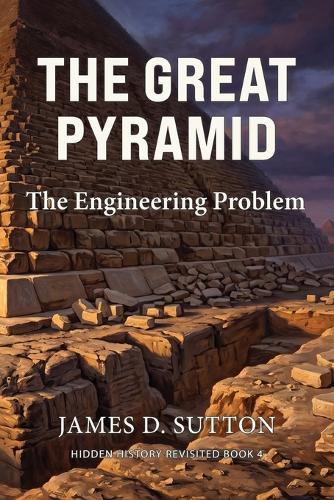
Two point one centimeters. That is the leveling tolerance of the Great Pyramid's base-across 230 meters of prepared bedrock, an area larger than nine football fields. The casing stones are fitted to within half a millimeter. The Descending Passage runs 107 meters straight to within 5 millimeters. The alignment to true north holds accurate to within four minutes of arc. Petrie measured all of this in 1883. Nobody has contested the numbers since. The question is whether the tools and techniques that orthodox Egyptology assigns to the builders can account for what the measurements show. The Great Pyramid: The Engineering Problem is not an ancient astronaut book. The Egyptians built the pyramid. The developmental sequence from Djoser to Khufu is documented. The workers' city is excavated. The Diary of Merer provides direct evidence of the logistics. This is an engineering investigation-the book that starts from the measurements, examines the orthodox construction models for what they explain and what they leave unexplained, presents the precision evidence from Petrie to Dunn without conspiracy framing, integrates the ScanPyramids discoveries, and asks the honest question: does the orthodox toolkit account for what the evidence shows? The investigation covers the complete engineering picture: the specifications that make the Great Pyramid the most precisely built large structure of its era. The ramp theories-external, spiral, internal-and what each explains and leaves open. The granite question-how 60-ton beams were raised to 60 meters within a structure that was already the largest building on Earth. The casing stone precision and what it demands of the toolmaker. Petrie's drill cores and the century-old debate about what cut them. The stone vases of Saqqara and the modern metrological analysis that found precision consistent with lathe machining. The experimental archaeology and the gap between what the experiments demonstrate and what the finest ancient examples show. The ScanPyramids Big Void, the North Face Corridor, and the non-invasive technologies that are revealing what the pyramid still hides. Every claim sourced to verified research. Every scholarly debate presented with both sides at full strength. Where the orthodox model explains the evidence, the book says so. Where the evidence exceeds the explanation, the book says that too. The measurements are not mysteries. They are facts. The question is whether the explanation fits them. Hidden History Revisited is a forty-book investigative nonfiction series examining the sites, artifacts, and hypotheses that challenge the orthodox archaeological narrative. Each book investigates a single subject from a position of sympathetic curiosity-taking the questions seriously, demanding evidence, and following the measurements wherever they lead. Book 1: The Case for a Lost Civilization. Book 3: Göbekli Tepe: The Knowledge Problem. Book 5: The Younger Dryas Impact. Book 6: The Sphinx: The Water Erosion Evidence. Each book stands alone. Each follows the evidence wherever it leads.
Full Product Details
Author: Erratic Publishing ,
James D Sutton
Publisher: Independently Published
Imprint: Independently Published
Volume: 4
Dimensions:
Width: 15.20cm
, Height: 1.60cm
, Length: 22.90cm
Weight: 0.386kg
ISBN: 9798259050648
Pages: 286
Publication Date: 27 April 2026
Audience:
General/trade
,
General
Format: Paperback
Publisher's Status: Active
Availability: Available To Order

We have confirmation that this item is in stock with the supplier. It will be ordered in for you and dispatched immediately.