Overview
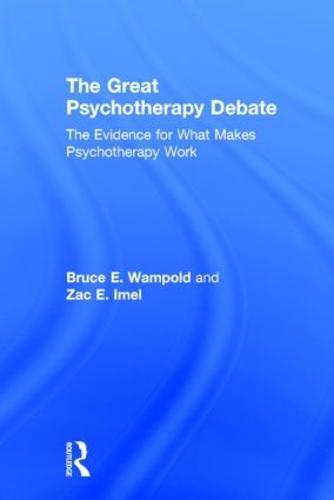
The second edition of The Great Psychotherapy Debate has been updated and revised to expand the presentation of the Contextual Model, which is derived from a scientific understanding of how humans heal in a social context and explains findings from a vast array of psychotherapies studies. This model provides a compelling alternative to traditional research on psychotherapy, which tends to focus on identifying the most effective treatment for particular disorders through emphasizing the specific ingredients of treatment. The new edition also includes a history of healing practices, medicine, and psychotherapy, an examination of therapist effects, and a thorough review of the research on common factors such as the alliance, expectations, and empathy.
Full Product Details
Author: Bruce E. Wampold (University of Wisconsin-Madison, USA) ,
Zac E. Imel (University of Utah, USA) ,
Zac E. Imel
Publisher: Taylor & Francis Inc
Imprint: Routledge
Edition: 2nd edition
Dimensions:
Width: 15.20cm
, Height: 2.30cm
, Length: 22.90cm
Weight: 0.544kg
ISBN: 9780805857085
ISBN 10: 0805857087
Pages: 334
Publication Date: 16 February 2015
Audience:
Professional and scholarly
,
Professional and scholarly
,
Professional & Vocational
,
Postgraduate, Research & Scholarly
Format: Hardback
Publisher's Status: Active
Availability: In Print

This item will be ordered in for you from one of our suppliers. Upon receipt, we will promptly dispatch it out to you. For in store availability, please contact us.
Reviews
The Great Psychotherapy Debate is one, if not the most, important book ever published about psychotherapy. Whether at the beginning, middle, or end of one's career, it is a must read. -Scott D. Miller, PhD, director of the International Center for Clinical Excellence The first edition of The Great Psychotherapy Debate served as a gauge tossed at the feet of the prevailing medical model of psychotherapy. Professor Wampold cogently brought together the literature in the area and provided a compelling option to the empirically supported movement. As a result there has been a wealth of research examining important issues pertaining to treatment effects. The second edition is a marked improvement over the first in its inclusion and thoughtful summary of the research in the area, providing an accessible summary of what we know and what needs to be examined. The scope is broad, covering both theoretical subtleties as well as sophisticated empirical analyses. It is written to serve both the skilled psychotherapy researcher as well as advanced students in the field. An extremely important book! -Terence J. G. Tracey, PhD, ABPP, professor and faculty head of the counseling and counseling psychology program at Arizona State University. The first edition of this book was a seminal publication that helped to organize vitally important information regarding the effects of psychotherapy. The second edition not only updates this work with the most contemporary research, but it also extends the discussion on the effects of psychotherapy along several different pathways and offers important implications for the future of the field. As such, I believe this book should be required reading for graduate students as well as anyone conducting psychotherapy research or implementing institutional policies regarding the delivery of psychotherapy. -Mark Hilsenroth, PhD, professor at Adelphi University.
The Great Psychotherapy Debate is one, if not the most, important book ever published about psychotherapy. Whether at the beginning, middle, or end of one's career, it is a must read. -Scott D. Miller, PhD, director of the International Center for Clinical Excellence The first edition of The Great Psychotherapy Debate served as a gauge tossed at the feet of the prevailing medical model of psychotherapy. Professor Wampold cogently brought together the literature in the area and provided a compelling option to the empirically supported movement. As a result there has been a wealth of research examining important issues pertaining to treatment effects. The second edition is a marked improvement over the first in its inclusion and thoughtful summary of the research in the area, providing an accessible summary of what we know and what needs to be examined. The scope is broad, covering both theoretical subtleties as well as sophisticated empirical analyses. It is written to serve both the skilled psychotherapy researcher as well as advanced students in the field. An extremely important book! -Terence J. G. Tracey, PhD, ABPP, professor and faculty head of the counseling and counseling psychology program at Arizona State University. The first edition of this book was a seminal publication that helped to organize vitally important information regarding the effects of psychotherapy. The second edition updates this work with the most contemporary research and also extends the discussion on the effects of psychotherapy along several different pathways, offering important implications for the future of the field. I believe this book should be required reading for graduate students as well as anyone conducting psychotherapy research or implementing institutional policies for the delivery of psychotherapy. -Mark Hilsenroth, PhD, professor at Adelphi University.
I recommend this book and would advise the fully fledged practitioner to keep coming back to it; the activist campaigning for rights and more services to be inspired by it; and researchers to take stepping stones and grow from it. As a registered counsellor and psychotherapy student, it will prove useful in my current practice as well as my ongoing studies. -Andrea Lavers MBACP is a counsellor in private practice in north-east London, Private Practice The Great Psychotherapy Debate is one, if not the most, important book ever published about psychotherapy. Whether at the beginning, middle, or end of one's career, it is a must read. -Scott D. Miller, PhD, director of the International Center for Clinical Excellence The first edition of The Great Psychotherapy Debate served as a gauge tossed at the feet of the prevailing medical model of psychotherapy. Professor Wampold cogently brought together the literature in the area and provided a compelling option to the empirically supported movement. As a result there has been a wealth of research examining important issues pertaining to treatment effects. The second edition is a marked improvement over the first in its inclusion and thoughtful summary of the research in the area, providing an accessible summary of what we know and what needs to be examined. The scope is broad, covering both theoretical subtleties as well as sophisticated empirical analyses. It is written to serve both the skilled psychotherapy researcher as well as advanced students in the field. An extremely important book! -Terence J. G. Tracey, PhD, ABPP, professor and faculty head of the counseling and counseling psychology program at Arizona State University. The first edition of this book was a seminal publication that helped to organize vitally important information regarding the effects of psychotherapy. The second edition updates this work with the most contemporary research and also extends the discussion on the effects of psychotherapy along several different pathways, offering important implications for the future of the field. I believe this book should be required reading for graduate students as well as anyone conducting psychotherapy research or implementing institutional policies for the delivery of psychotherapy. -Mark Hilsenroth, PhD, professor at Adelphi University. Bruce E. Wampold and Zac E. Imel's The Great Psychotherapy Debate [...] is a commendable effort to explore the empirical basis undergirding the processes of psychotherapy chane. The second edition of their book is a well-written expansion and revision of their first edition. The centerpiece of the book is the authors' contextual model of psychotherapy. [...] [This] text is a significant contribution to the literature. --Stefan G. Hoffman & Joshua Curtiss, PsycCRITIQUES, 2015 In the first edition Wampold challenged the long-held belief that psychotherapy can best be understood from a medical model and by using a balanced and carefully selected set of studies, he presented a radical new approach, namely the contextual model, to understanding why psychotherapy works. This second addition updates this work by bringing together the wealth of research examining important issues pertaining to treatment effects since the publication of the first edition and by providing an accessible summary of what we know and what needs to be examined. [...] This new edition of The Great Psychotherapy Debate, with its inclusion of history of healing practices, medicine and psychotherapy and a thoughtful review and summary of the research in the area on common factors such as the alliance, expectations and empathy, updates the work that started in the first edition greatly, and extends the discussion on the effects of psychotherapy along different pathways, offering important implications for the future of the field. Because the scope of the book is broad enough to cover both theoretical and historical issues and also thorough, sophisticated empirical analyses, it is of use for both a psychotherapist in the field or a skilled psychotherapy researcher as well as an advanced psychology or counseling student. I heartily recommend this book for any graduate course on psychotherapy and also for anyone who wants to conduct psychotherapy research. --Prof. Dr. Kamuran Elbeyoglu, Toros University, Turkey, metapsychology.net
Author Information
University of Wisconsin-Madison, USA