|
|
|||
|
||||
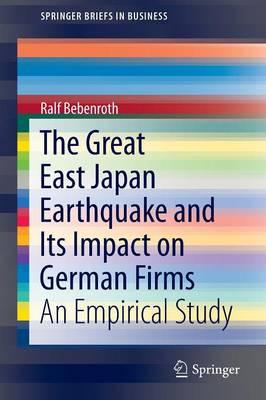
OverviewThis publication sheds light on how Japan-based German firms dealt with the impact of the Great East Japan Earthquake that occurred in March 2011. To gather data, a questionnaire was developed and sent out in April 2012 to 244 German subsidiaries based in the Kanto area, mainly in Tokyo, with replies received from the top managers of 84 firms. In addition, the author conducted follow-up interviews with top managers of 14 of those firms in Tokyo to illuminate interesting aspects of the responses given in the questionnaires. It is shown that the overall impact on the performance of German firms was comparatively low. Those firms have now returned to normal operation and face relatively few disaster-related problems. However, firms with higher autonomy more frequently moved their offices either to the Kansai area, including Osaka, Kobe and Kyoto, or at least temporarily closed down. In retrospect, the interviews made clear that relocating or suspending operations was a costly mistake. Incontrast to transaction cost theory, which states that subsidiaries should be given high autonomy in such cases of emergency, it would have been better for the headquarters offices to have communicated more intensively with the management of their subsidiaries. Full Product DetailsAuthor: Ralf BebenrothPublisher: Springer Verlag, Japan Imprint: Springer Verlag, Japan Edition: 2014 ed. Dimensions: Width: 15.50cm , Height: 0.30cm , Length: 23.50cm Weight: 1.241kg ISBN: 9784431544500ISBN 10: 443154450 Pages: 52 Publication Date: 30 October 2013 Audience: Professional and scholarly , Professional & Vocational Format: Paperback Publisher's Status: Active Availability: Manufactured on demand We will order this item for you from a manufactured on demand supplier. Table of ContentsChapter 1 Disaster Impact 1 Introduction 2 Firm Level Impact (Why Focus Solely on German Firms? Questionnaire Based Research) 3 Economic Impact and Move (Temporary Closing or Relocation. Economic Impact. Autonomy and Leaving Japan?) 4 Situation of Non-Japanese Employees After the Disaster (Headquarter Sent Expatriates. Short-Term Visitors. Locally Hired Non-Japanese) 5 Results and Conclusion.- Chapter 2 Subsidiary Autonomy and Expatriate Retreat 1 Introduction 2 Theoretical Background. 3 Development of Hypotheses 4 Methods 5 Results 6 Discussion 7 Conclusion.- Chapter 3 Subsidiary Dependency on Expatriate Departure and Headquarter Trouble 1 Introduction 2 Theoretical Background 3 Development of Hypotheses 4 Methods 5 Results 6 Discussion 7 Conclusion.- Chapter 4: Closing Chapter.ReviewsAuthor InformationDr. Ralf Bebenroth, born in Germany, is a tenured Professor for Business at Kobe University. After being awarded twice with a two year post doctoral fellowship to Japan, one from DAAD and the other from Humboldt foundation, he started working at Kobe University in 2005. Ralf Bebenroth spent the first five years of his academic career at Kobe University conducting research about business and economics solely in Japanese language. Tab Content 6Author Website:Countries AvailableAll regions |
||||