|
|
|||
|
||||
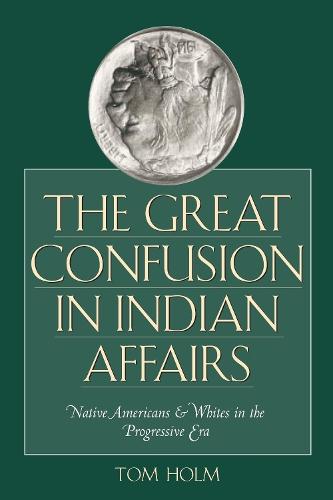
OverviewThe United States government thought it could make Indians ""vanish."" After the Indian Wars ended in the 1880s, the government gave allotments of land to individual Native Americans in order to turn them into farmers and sent their children to boarding schools for indoctrination into the English language, Christianity, and the ways of white people. Federal officials believed that these policies would assimilate Native Americans into white society within a generation or two. But even after decades of governmental efforts to obliterate Indian culture, Native Americans refused to vanish into the mainstream, and tribal identities remained intact. This revisionist history reveals how Native Americans' sense of identity and ""peoplehood"" helped them resist and eventually defeat the U.S. government's attempts to assimilate them into white society during the Progressive Era (1890s-1920s). Tom Holm discusses how Native Americans, though effectively colonial subjects without political power, nonetheless maintained their group identity through their native languages, religious practices, works of art, and sense of homeland and sacred history. He also describes how Euro-Americans became increasingly fascinated by and supportive of Native American culture, spirituality, and environmental consciousness. In the face of such Native resiliency and non-Native advocacy, the government's assimilation policy became irrelevant and inevitably collapsed. The great confusion in Indian affairs during the Progressive Era, Holm concludes, ultimately paved the way for Native American tribes to be recognized as nations with certain sovereign rights. Full Product DetailsAuthor: Tom HolmPublisher: University of Texas Press Imprint: University of Texas Press Dimensions: Width: 15.20cm , Height: 1.90cm , Length: 22.90cm Weight: 0.454kg ISBN: 9780292709621ISBN 10: 0292709625 Pages: 264 Publication Date: 01 September 2005 Audience: Professional and scholarly , Professional & Vocational Format: Paperback Publisher's Status: Active Availability: In Print This item will be ordered in for you from one of our suppliers. Upon receipt, we will promptly dispatch it out to you. For in store availability, please contact us. Table of ContentsPreface Chapter I. The Vanishing Policy Chapter II. Persistent Peoples: Native American Social and Cultural Continuity Chapter III. The New Indians Chapter IV. Symbols of Native American Resiliency: The Indian Art Movement Chapter V. Preserving the Indian : The Reassessment of the Native American Image Chapter VI. Progressive Ambiguity: The Reassessment of the Vanishing Policy Chapter VII. The Great Confusion in Indian Affairs Chapter VIII. Epilogue: John Collier and Indian Reform Notes Bibliography IndexReviewsIn the end, this is a valuable study because Holm offers a new approach to a period that deserves further analysis. The Great Confusion is essential to understanding Indian affairs during and since the Progressive period.--E. A Schwartz History Author InformationTOM HOLM, a Professor of American Indian Studies at the University of Arizona, is a Cherokee and Muskogee Creek (enrolled Cherokee Nation of Oklahoma). Tab Content 6Author Website:Countries AvailableAll regions |
||||