Overview
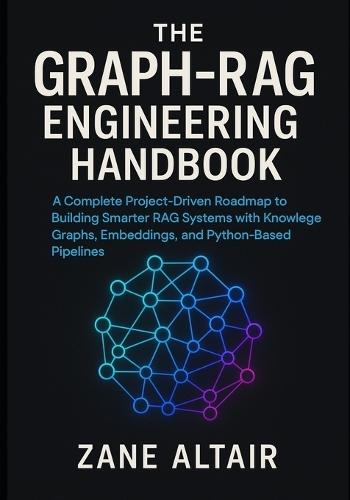
The Graph-RAG Engineering Handbook delivers an authoritative, project-driven guide to one of the most important breakthroughs in modern AI: the fusion of knowledge graphs, vector embeddings, and large language models to build smarter, more accurate, and more reliable Retrieval-Augmented Generation systems. Designed for technical professionals who demand clarity, precision, and real-world practicality, this handbook transforms the complexity of Graph-RAG into a clear roadmap for high-performance intelligent systems. This book provides a comprehensive yet concise overview of how Graph-RAG works, why it matters, and how it outperforms traditional RAG pipelines. Readers gain a foundational understanding of how knowledge graphs strengthen retrieval quality, reduce hallucinations, enforce domain structure, and enhance reasoning capabilities. Every major component of the Graph-RAG ecosystem is introduced with purpose and technical depth, including ontologies, schema modeling, embedding workflows, graph databases, retrieval orchestration, multi-hop reasoning, and Python-based ingestion pipelines. Beyond the foundation, the handbook offers a deeper exploration into advanced engineering strategies used by high-performing teams building next-generation AI systems. Readers learn how to design and optimize knowledge graph schemas, build automated extraction pipelines, align embeddings with entity-level representations, implement hybrid retrieval layers, develop reasoning workflows, construct graph-powered agentic systems, and scale deployments using modern cloud architectures. The book takes a practical, engineering-first perspective, emphasizing architectural patterns, operational workflows, and the essential techniques needed to maintain precision and reliability in production environments. Throughout the book, the focus remains on real-world relevance. The content covers project-level blueprints, structured reasoning patterns, evaluation frameworks, monitoring strategies, and long-term knowledge maintenance practices. Each chapter is crafted to support developers, machine learning engineers, data scientists, and architects who are building enterprise-grade systems that require accountability, structure, and repeatable performance. Whether developing intelligent search systems, automated compliance tools, decision-support assistants, or complex multi-modal pipelines, readers gain the tools needed to design systems capable of high factual accuracy and strong interpretability. The Graph-RAG Engineering Handbook serves as a powerful resource for anyone ready to advance beyond traditional vector-based RAG and build structured, resilient, and highly explainable intelligent systems. It provides the depth required for serious practitioners and the clarity essential for consistent implementation. Readers who want to take control of their data, construct robust knowledge layers, and develop retrieval systems that operate with confidence and precision will find this handbook indispensable. If the goal is to build smarter, more reliable, and deeply contextual AI systems powered by the strengths of knowledge graphs and modern LLMs, this handbook provides the essential roadmap. Step into the next generation of Retrieval-Augmented Generation and bring structure, accuracy, and engineering discipline to every intelligent application built upon it.
Full Product Details
Author: Zane Altair
Publisher: Independently Published
Imprint: Independently Published
Dimensions:
Width: 17.80cm
, Height: 1.10cm
, Length: 25.40cm
Weight: 0.367kg
ISBN: 9798278135661
Pages: 206
Publication Date: 09 December 2025
Audience:
General/trade
,
General
Format: Paperback
Publisher's Status: Active
Availability: Available To Order

We have confirmation that this item is in stock with the supplier. It will be ordered in for you and dispatched immediately.