Overview
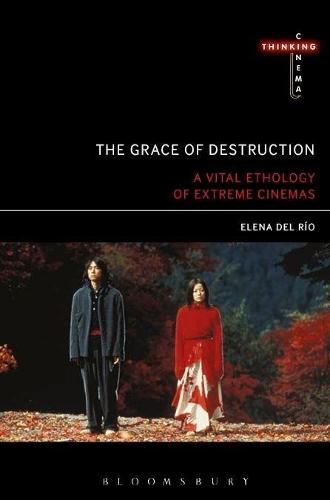
For Elena del Río, extreme cinema is not only qualitatively different from the representations of violence we encounter in popular, mainstream cinema; it also constitutes a critique of the socio-moral system that produces (in every sense of the word) such violence. Drawing inspiration from Deleuze’s ethics of immanence, Spinoza’s ethology of passions and Nietzsche’s typology of forces, The Grace of Destruction examines the affective extremities common in much of global, contemporary cinema from the affirmative perspective of vital forces and situations—extremities such as moral/religious oppression, biopolitical violence, the pain involved in gender relations, the event of death and planetary extinction. Her analysis diverges from the current literature on extreme cinema through its selection of films, which include key international examples, and through its foregrounding of relational, affective politics over representations of sexuality and graphic violence. Detailed formal and philosophical analyses of films like The White Ribbon, Dogville, Code Unknown, Battle in Heaven, Sonatine, Fireworks, Dolls, Takeshis’, Inland Empire and Melancholia are meant to move us away from the moral appraisal of violence and destruction, and to compose an ethological philosophy of cinema based on Deleuze’s idea that, “when truth and judgment crumble, there remain bodies, which are… nothing but forces.”
Full Product Details
Author: Elena del Río (University of Alberta, Canada)
Publisher: Bloomsbury Publishing Plc
Imprint: Bloomsbury Academic
Dimensions:
Width: 15.20cm
, Height: 1.80cm
, Length: 22.90cm
Weight: 0.544kg
ISBN: 9781501303029
ISBN 10: 1501303023
Pages: 288
Publication Date: 05 May 2016
Audience:
College/higher education
,
Undergraduate
,
Postgraduate, Research & Scholarly
Format: Hardback
Publisher's Status: Active
Availability: Manufactured on demand

We will order this item for you from a manufactured on demand supplier.
Reviews
Elena del Rio's The Grace of Destruction is a remarkable book combining a passion for cinema that yields stunning critical insights with an acute theoretical genealogy of contemporary culture's moralism. Although thoroughly attuned to the most recent developments in Deleuzian philosophies of cinema and affect, and without being negatively reactive against the contemporary field of cinema studies, del Rio's work manages to be breathtakingly original. Anyone interested in cinematic aesthetics and the radical potential of cinema as a mode of thought should read this book. Claire Colebrook, Edwin Erle Sparks Professor of English, The Pennsylvania State University, USA In her formidable new book, The Grace of Destruction, Elena del Rio examines a corpus of violent, shocking, and ultimately extreme films-the very films that moralists might otherwise condemn-in order to mount furious critique of the transcendent values of modern morality. In conversation with Spinoza, Nietzsche, Deleuze, and Guattari, among others, The Grace of Destruction dares its readers to conceive of cinema as a vitalist ethics, but also to grasp ethics in the absence of humanism. A brave, uncompromising, and important book. Gregory Flaxman, Associate Professor of English and Comparative Literature, University of North Carolina, Chapel Hill, USA
Elena del Rio's The Grace of Destruction is a remarkable book combining a passion for cinema that yields stunning critical insights with an acute theoretical genealogy of contemporary culture's moralism. Although thoroughly attuned to the most recent developments in Deleuzian philosophies of cinema and affect, and without being negatively reactive against the contemporary field of cinema studies, del Rio's work manages to be breathtakingly original. Anyone interested in cinematic aesthetics and the radical potential of cinema as a mode of thought should read this book. Claire Colebrook, Edwin Erle Sparks Professor of English, The Pennsylvania State University, USA
Author Information
Elena del Río is Professor of Film Studies at the University of Alberta, Canada. Her essays have been featured in journals such as Camera Obscura, Discourse, Quarterly Review of Film and Video, Film-Philosophy, The New Review of Film and Television Studies, SubStance, and Deleuze Studies. She has also contributed essays to edited collections on the films of Atom Egoyan, Rainer W. Fassbinder, and on the philosophy of film, and Deleuze and cinema. She is the author of Deleuze and the Cinemas of Performance: Powers of Affection (2008).