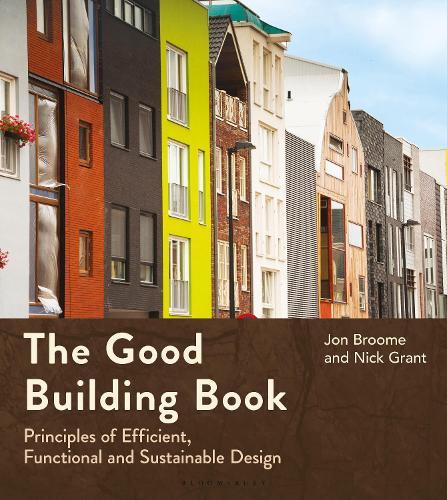
Overview
‘Mandatory reading for everyone in our design practice.’ CHARLIE LUXTON ‘A deeply fascinating book.’ MARK BRINKLEY Drawing from extensive experience, award-winning architect Jon Broome and design engineer Nick Grant celebrate undervalued ideas that have stood the test of time. The Good Building Book provides provocative and empowering insights, along with critical analysis, to help rethink design and construction. - Guides readers through project development, from single home to larger projects. - Examines performance standards and navigates commercial aspects such as budgets, contracts, and consultants. - Explores strategic design and principles of good details for building elements, weaving together aesthetics, performance, and value in context. - Offers practical principles and design strategies relevant for a rapidly changing world. - Features more than 150 photos and a further 90 diagrams. Whether you’re a designer or contractor, building user or client, student or teacher, this solution-focused book provides a new way of thinking about how we shape the built environment for a sustainable future.
Full Product Details
Author: Jon Broome , Nick Grant
Publisher: Bloomsbury Publishing PLC
Imprint: Bloomsbury Publishing PLC
Dimensions:
Width: 21.00cm
, Height: 2.20cm
, Length: 23.40cm
Weight: 0.940kg
ISBN: 9781399417136
ISBN 10: 1399417134
Pages: 288
Publication Date: 29 January 2026
Audience:
General/trade
,
General
Format: Paperback
Publisher's Status: Forthcoming
Availability: Not yet available 
This item is yet to be released. You can pre-order this item and we will dispatch it to you upon its release.
Table of Contents
Introduction 1.0 Design 1.1 What is a good building? An introduction to the key principles of good buildings 1.2 Beauty, utility and economy in action Archives and museums provide useful insight 1.3 Buildings as sculpture When form overrides function to produce bad buildings 1.4 Eco-bling – innovation and aspiration Aspiration and innovation can bring questionable results 1.5 Problem-solving designs The features of a good building design process 1.6 The search for quality What the designer must bring to the process – the need for care 1.7 A modern vernacular Four principles coming together to shape a process for designing and producing good buildings 1.8 The modern vernacular in action Applying the four principles in action in the field of housing design 1.9 Self-build Lessons from an approach to housing more akin to the idea of a modern vernacular 1.10 Sustainable neighbourhoods How the principles we have learnt from housing can inform good places, towns and cities 2.0 Reducing energy 2.1 Comfort and sufficiency Both important considerations, but what kind of ‘comfort’ and how much space do we need? 2.2 Closing the performance gap Why many buildings do not achieve their planned minimum-emission performance 2.3 Form factor, massing and shape How size and shape are often fixed before detailed cost, energy or structural analysis are performed 2.4 Environmental modelling and targets Numbers and targets are crucial to an understanding of how to improve the performance of buildings 2.5 Passive solar design Shifting the focus from passive solar gains to glazing design to serve the comfort and of occupants 2.6 Why Passivhaus? The benefits, limitations and myths surrounding the use of this highly effective building standard 2.7 Buildings must breathe Draught-free construction – and the resulting need for moisture and odour control – are essential 3.0 Low environmental impact construction 3.1 Heavyweight or lightweight? Advantages and disadvantages of both approaches and some myths explored 3.2 Upfront carbon emissions How to reduce emissions arising from the act of construction, alongside other environmental impacts 3.3 The more details, the more devils Principles for detailing to create robust buildings that achieve design, performance and sustainability aims 3.4 Elements of good building Approaches to the design of foundations, raised ground-floor construction, non-loadbearing walls, flat roof construction and windows 3.5 Services Efficient building services should be integrated into the design from an early stage 4.0 The business of building 4.1 Land Focusing on the issue of land ownership and value, huge influencers on what is built 4.2 Design education and post-occupancy evaluation How to acquire the skills, knowledge and values designers need; learning what works and what doesn’t 4.3 Cost and value Why do costs vary? Who benefits from value? How to reduce uncertainty and control costs 4.4 Value engineering in design Understanding how buildings perform and learning from experience 4.5 Appointing a design team and contractors A constructive approach to finding the right team and managing costs, quality and time 4.6 Risk management and regulation Risks that cannot be avoided and how to mitigate them, and the uses and limitations of regulation Afterword Notes on the authors Chapter notes Photo credits Acknowledgements Index
Reviews
An expansive and insightful read. Years of experience pulls together the interconnected threads of design and building with rare clarity. Mandatory reading for everyone in our design practice – building is too important to leave to the experts. This book gives insight to allow everyone to engage in changing what and how we build, for the better. * Charlie Luxton, architectural designer and television presenter * Every now and then, a book comes along that makes you wish it had been on your reading list from day one. This is one of those books. Clear-eyed, practical, and deeply rooted in experience, it’s an essential read for anyone who wants to make a meaningful contribution to the built environment. Whether you’re just starting out or looking to reset your approach, this book will challenge and inspire you to do better, for people, for buildings, and for the planet. * Sarah Lewis, architect and research & policy director at the UK Passivhaus Trust * A deeply fascinating book. The two authors have been grappling with the question of what makes a good building all their working lives. Here they make a deep dive into what they’ve learned along the way. Whether you are a self builder or a major developer, prepare to have your pre-conceptions turned upside down and to emerge a great deal wiser. * Mark Brinkley, author of The Housebuilder's Bible * Lucid insights into making buildings (particularly dwellings) and places nicer, simpler, more sustainable, and more cost-effective to build and to run. Hard-earned wisdom and iconoclasm from the deep experience of the authors and their colleagues. A must-read for anyone wondering how to do better. * Bill Bordass, research and policy adviser at the Usable Buildings Trust UK * Jon and Nick get to the essence of what makes buildings genuinely good. The findings may surprise you. * Juraj Mikurcik, architect and self-builder * Finally, feels like a lifetime in the making which I guess in some ways it is. Written by people who truly understand how to deliver great buildings in theory and practice. Having worked with both Jon and Nick over decades now, I’m glad they were able to inform my journey from self-builder to commercial developer of passive house projects. I hope this is distributed widely amongst architects, builders and developers everywhere! * Tahir Sharif, developer *
Author Information
Jon Broome trained as an architect but is now a designer, enabler and self-builder. Previously Director of Architype, he now lives in London, where he runs his own consultancy specialising in sustainable construction. Nick Grant is a freelance energy consultant and principal of Elemental Solutions. One of the UK pioneers of Passivhaus Standard, he is an active contributor to discussions on sustainable design as well as a practical engineer and self builder.
Tab Content 6
Author Website:
Countries Available
All regions
|