Overview
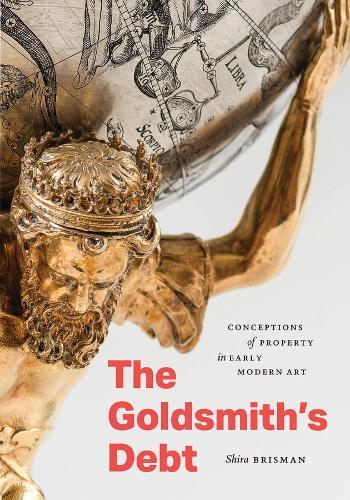
Reveals how art shaped the economy, social order, and legal claims during the rise of capitalism. In the sixteenth century, German goldsmiths played a unique role in articulating property claims and social values. These artisans shaped precious metals into visible expressions of domination, subordination, and obligation. The objects they crafted played a major role in the practices of exchange and inheritance that were reconfiguring a tumultuous economic landscape. Cities commissioned goldsmiths to transform revenue into goblets that could be given as diplomatic gifts or reconverted into currency in times of war, and courts used serving implements as promises of credit. With The Goldsmith's Debt, art historian Shira Brisman offers the first book-length study of the Nuremberg goldsmith Christoph Jamnitzer (1563–1618), who created elaborate gilded silver drinking cups that he crafted into unexpected forms, with designs ranging from racialized heads to mining scenes. Considering how works of art can shape a social order, Brisman explores what Jamnitzer's etchings and goblets reveal about how goldsmiths shared ideas and how their patrons used commissioned works to legitimize their claims over land and the rights of others. Drawing on a range of textual and material evidence—including commentaries on Roman and customary laws, wills and civic statutes, printed designs, and firsthand study of lidded cups in dozens of major European institutions—this unprecedented study places the goldsmith at the heart of the era's arguments about how people and lands should be subjugated. Brisman reveals the insidious side of these objects that were often used to advance socially conservative agendas, and she presents radical proposals for addressing inequity in the world of ornament prints.
Full Product Details
Author: Shira Brisman ,
Christoph Jamnitzer
Publisher: The University of Chicago Press
Imprint: University of Chicago Press
Dimensions:
Width: 17.80cm
, Height: 3.80cm
, Length: 25.40cm
Weight: 1.701kg
ISBN: 9780226845203
ISBN 10: 0226845206
Pages: 496
Publication Date: 23 April 2026
Audience:
Professional and scholarly
,
College/higher education
,
Professional & Vocational
,
Postgraduate, Research & Scholarly
Format: Hardback
Publisher's Status: Active
Availability: Out of stock

The supplier is temporarily out of stock of this item. It will be ordered for you on backorder and shipped when it becomes available.
Reviews
“In this meticulously researched and thought-provoking book, Brisman brings alive the local and global contexts in which Northern European art projected—and enacted—claims to social, political, and economic power. The Goldsmith’s Debt is an exemplary exploration of the bonds between art and property.” -- Daniel Jütte, New York University
“In this meticulously researched and thought-provoking book, Brisman brings alive the local and global contexts in which Northern European art projected—and enacted—claims to social, political, and economic power. The Goldsmith’s Debt is an exemplary exploration of the bonds between art and property.” -- Daniel Jütte, New York University “Brisman offers a highly original and often eye-opening interpretation of sixteenth-century Nuremberg gold and silver vessels. Looking beyond existing ways of framing goldsmiths’ works as technical and aesthetic accomplishments, as objects of diplomatic exchange, as elements in the rituals of elite dining, or as Kunstkammer wonders, Brisman considers them instead within the professional, political, social, and legal ecology of Nuremberg’s civic life. Successfully challenging many of the traditional epistemological assumptions, Brisman conducts a forensic examination into how a conception of property bound itself to the goldsmith’s art.” -- Andrew Morrall, Bard Graduate Center “In this seminal book about the Nuremberg goldsmith Christoph Jamnitzer, Brisman offers a new interpretation of the property claims made by members of a 'sworn craft' and their patrons, who belonged to the ruling, land-owning elite. This is the first study to discuss a goldsmith’s work within the context of broader legal, moral, and ethical concerns regarding the status of crafts and the rights of access to privilege and wealth. Centering on the precarious moment when Europeans began to lay claim to ‘new’ worlds, Brisman also reminds us of our own responsibility to be mindful of our planet’s limited resources.” -- Christine Göttler, University of Bern
Author Information
Shira Brisman, associate professor of the history of art at the University of Pennsylvania, is the author of Albrecht Dürer and the Epistolary Mode of Address, also published by the University of Chicago Press.