Overview
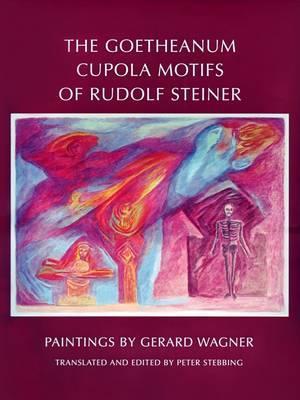
Gerard Wagner's paintings of Rudolf Stiener's Goetheanum cupola sketches bring these works to a wide audience that would otherwise have little access to or knowledge of those representations of Steiner's artistic spiritual vision contained in the first Goetheanum and lost to the fire that destroyed that great building. Wagner re-created those archetypal motifs in new ways over a period of decades. They constitute an artistic high point of Wagner's work as a whole, but they cannot be separated from the Goetheanum itself, nor can they be fully understood except in the context of anthroposophic spiritual science. In this sense, The Goetheanum Cupola Motifs of Rudolf Steiner points to the historic and spiritual importance of the first Goetheanum building. Rudolf Steiner's lecture on October 25, 1914, and his lecture on the paintings of the small cupola on January 25, 1920, are published in English here for the first, along with color photographs from 1922. Also included are the little-known colored etchings of the Goetheanum window motifs made by by Assya Turgenieff with Rudolf Steiner, as well as other centrally important contributions to an understanding of this new direction in art. Though the main emphasis is on visual examples, the book achieves something more than simply cataloging these works of art. The book conveys, too, a sense of the artistic process itself. Thus, Gerard Wagner's observations here have a special relevance. In addition to the two lectures by Rudolf Steiner and the paintings by Gerard Wagner--in full color--The Goetheanum Cupola Motifs of Rudolf Steiner presents essays from Peter Stebbing, Louise Clason, Assya Turgenieff, and Gerard Wagner. ""Along with the architectural and sculptural forms of the double-domed first Goetheanum, the cupola paintings further epitomized the artistic conception of this unique building. The painting motifs extending over the surface of the two cupolas encompassed the evolution of the world as a whole, from its creation by the biblical Elohim to the great epochs of Lemuria and Atlantis that followed. Traversing the post-Atlantean cultural epochs, the beholder was gradually led to the building's central motif: the Mystery of Golgotha as the mid-point of world evolution, with its implications for the future development of the Earth and humanity."" --Sergei O. Prokofieff (from his foreword) CONTENTS: * Foreword by Sergei O. Prokofieff * Preface * The Renewal of the Artistic Principle / Rudolf Steiner * Goethe and the Goetheanum / Rudolf Steiner * The Artists Who Originally Worked on Painting the Cupolas * of the First Goetheanum / Peter Stebbing * Recollections of the Years of Painting in the Small Cupola of the First Goetheanum / Louise Clason * I. THE MOTIFS OF THE LARGE CUPOLA * The Large Cupola Sketch-Motifs of Rudolf Steiner * Large Cupola Studies of Gerard Wagner * A Further Development of the Large Cupola Motifs / Peter Stebbing * II. THE MOTIFS OF THE SMALL CUPOLA * The Paintings of the Small Cupola / Rudolf Steiner * Small Cupola Studies of Gerard Wagner * The Question of the North Side: ""Counter Colors"" or ""Complementary Colors""? / Peter Stebbing * III. THE COLORED GLASS WINDOW MOTIFS * Indications of Rudolf Steiner for Engraving the Window Motifs / Assya Turgenieff * On the Windows of the First Goetheanum / Rudolf Steiner * The Red Window Middle Motif Metamorphosed (Paintings of Gerard Wagner) * APPENDIX * A Path of Practice in Painting / Gerard Wagner * Biographical Sketches * About the Painter Gerard Wagner / Peter Stebbing * Selected Bibliography
Full Product Details
Author: Peter Stebbing ,
Gerard Wagner ,
Peter Stebbing
Publisher: Anthroposophic Press Inc
Imprint: SteinerBooks, Inc
Dimensions:
Width: 21.50cm
, Height: 2.30cm
, Length: 28.00cm
Weight: 1.270kg
ISBN: 9780880107372
ISBN 10: 0880107375
Pages: 248
Publication Date: 01 September 2011
Audience:
General/trade
,
General
Format: Hardback
Publisher's Status: Active
Availability: Available To Order

We have confirmation that this item is in stock with the supplier. It will be ordered in for you and dispatched immediately.
Reviews
I found The Goetheanum Cupola Motifs of Rudolf Steiner excellent with regard to content, as well as the layout and the quality of the pictures. One can only wish this book many readers, and that by means of it they will be able to comprehend more profoundly the magnitude of what Rudolf Steiner accomplished in the field of the visual arts--as also what his pupil, the unique artist Gerard Wagner, has achieved in continuing this impulse. Particularly impressive, above all, is Wagner's steadfast loyalty to the art impulse of Rudolf Steiner, combined with his own sovereign and independent work on the basic motifs, which are wonderfully documented in this book. --Sergei O. Prokofieff
I found The Goetheanum Cupola Motifs of Rudolf Steiner excellent with regard to content, as well as the layout and the quality of the pictures. One can only wish this book many readers, and that by means of it they will be able to comprehend more profoundly the magnitude of what Rudolf Steiner accomplished in the field of the visual arts--as also what his pupil, the unique artist Gerard Wagner, has achieved in continuing this impulse. Particularly impressive, above all, is Wagner's steadfast loyalty to the art impulse of Rudolf Steiner, combined with his own sovereign and independent work on the basic motifs, which are wonderfully documented in this book. --Sergei O. Prokofieff
Author Information
Gerard Wagner (1906-1999) was born in Germany and grew up in England. He began his vocation as an artist by learning from an English plein air painter before starting formal studies at the Royal College of Art in London. Beginning in 1926, he took up the challenge of a new direction in painting as initiated by Rudolf Steiner, which became the essence of his life's work for more than seventy years. Through his efforts to grasp the secrets of Steiner's training sketches for painters, Wagner succeeded in disclosing their metamorphic character and, from this, was able to develop a systematic approach to painting. Elisabeth Wagner-Koch, whom Gerard later married, became his first student in 1950, and together they established The Painting School at the Goetheanum, of which he remained the principle teacher until his death in Arlesheim, Switzerland. Rudolf Steiner's indications for an art of the future remained the impulse for Wagner's research and artistic activity throughout his life. The fruits of his research are a unique method of teaching and his archive of paintings, which continue to be a source of inspiration for the school. Wagner's wife Elisabeth cares for the archive of about 4,000 paintings. Sergei O. Prokofieff (1954-2014) was born in Moscow, where he studied fine arts and painting at the Moscow School of Art. At an early age he encountered the work of Rudolf Steiner and quickly realized that his life would be dedicated to the Christian path of esoteric knowledge. He wrote his first book, Rudolf Steiner and the Founding of the New Mysteries, while living in Soviet Russia, and it was published in English in 1994. After the fall of Communism, he helped establish the Anthroposophical Society in Russia. In 2001, he became a member of the Executive Council of the General Anthroposophical Society at the Goetheanum in Switzerland. More than 30 of his books have been translated into English. Sergei Prokofieff passed away in Dornach, Switzerland. Peter Stebbing was born in Copenhagen in 1941 and attended Waldorf schools before studying art in Brighton and London. He moved to the U.S. and graduated from Cornell University with an M.F.A. in painting. Following his first teaching stint at the University of Kansas, Peter began teaching color courses at the City University of New York in 1970. Having begun investigations into Goethe's color theory, he visited the Gerard Wagner painting school in Dornach, Switzerland. There he began training with Wagner, who asked him to teach in the school. Peter later established a painting school at the Threefold Educational Foundation in Spring Valley, New York. For the past thirty years, he has taught introductory courses in Goethe's color theory with experiments in England, Germany, Switzerland, and the U.S. Since 1992, Peter has been director of the Arteum Painting School in Dornach, Switzerland, and has held a number of exhibitions of his work in Europe and North America. Peter Stebbing was born in Copenhagen in 1941 and attended Waldorf schools before studying art in Brighton and London. He moved to the U.S. and graduated from Cornell University with an M.F.A. in painting. Following his first teaching stint at the University of Kansas, Peter began teaching color courses at the City University of New York in 1970. Having begun investigations into Goethe's color theory, he visited the Gerard Wagner painting school in Dornach, Switzerland. There he began training with Wagner, who asked him to teach in the school. Peter later established a painting school at the Threefold Educational Foundation in Spring Valley, New York. For the past thirty years, he has taught introductory courses in Goethe's color theory with experiments in England, Germany, Switzerland, and the U.S. Since 1992, Peter has been director of the Arteum Painting School in Dornach, Switzerland, and has held a number of exhibitions of his work in Europe and North America. Peter Stebbing was born in Copenhagen in 1941 and attended Waldorf schools before studying art in Brighton and London. He moved to the U.S. and graduated from Cornell University with an M.F.A. in painting. Following his first teaching stint at the University of Kansas, Peter began teaching color courses at the City University of New York in 1970. Having begun investigations into Goethe's color theory, he visited the Gerard Wagner painting school in Dornach, Switzerland. There he began training with Wagner, who asked him to teach in the school. Peter later established a painting school at the Threefold Educational Foundation in Spring Valley, New York. For the past thirty years, he has taught introductory courses in Goethe's color theory with experiments in England, Germany, Switzerland, and the U.S. Since 1992, Peter has been director of the Arteum Painting School in Dornach, Switzerland, and has held a number of exhibitions of his work in Europe and North America. Rudolf Steiner (b. Rudolf Joseph Lorenz Steiner, 1861-1925) was born in the small village of Kraljevec, Austro-Hungarian Empire (now in Croatia), where he grew up. As a young man, he lived in Weimar and Berlin, where he became a well-published scientific, literary, and philosophical scholar, known especially for his work with Goethe's scientific writings. Steiner termed his spiritual philosophy anthroposophy, meaning ""wisdom of the human being."" As an exceptionally developed seer, he based his work on direct knowledge and perception of spiritual dimensions. He initiated a modern, universal ""spiritual science"" that is accessible to anyone willing to exercise clear and unbiased thinking. From his spiritual investigations, Steiner provided suggestions for the renewal of numerous activities, including education (general and for special needs), agriculture, medicine, economics, architecture, science, philosophy, Christianity, and the arts. There are currently thousands of schools, clinics, farms, and initiatives in other fields that involve practical work based on the principles Steiner developed. His many published works feature his research into the spiritual nature of human beings, the evolution of the world and humanity, and methods for personal development. He wrote some thirty books and delivered more than six thousand lectures throughout much of Europe. In 1924, Steiner founded the General Anthroposophical Society, which today has branches around the world. Assya Turgenieff, a niece of the famous novelist Ivan Turgenieff, was the pioneer artist who, under the guidance of Rudolf Steiner, made the stained glass windows for the first Goetheanum in Dornach, Switzerland.