Overview
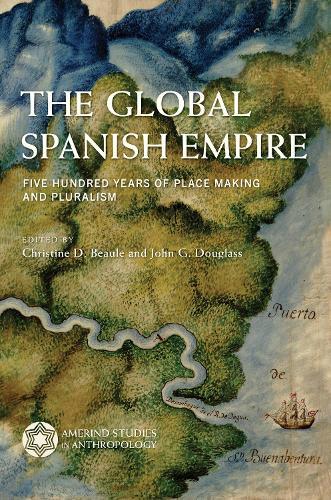
The Spanish Empire was a complex web of places and peoples. Through an expansive range of essays that look at Africa, the Americas, Asia, the Caribbean, and the Pacific, this volume brings a broad range of regions into conversation. The contributors focus on nuanced, comparative exploration of the processes and practices of creating, maintaining, and transforming cultural place making within pluralistic Spanish colonial communities. The Global Spanish Empire argues that patterned variability is necessary in reconstructing Indigenous cultural persistence in colonial settings. The volume's eleven case studies include regions often neglected in the archaeology of Spanish colonialism. The time span under investigation is extensive as well, transcending the entirely of the Spanish Empire, from early impacts in West Africa to Texas during the 1800s. The contributors examine the making of a social place within a social or physical landscape. They discuss the appearance of hybrid material culture, the incorporation of foreign goods into local material traditions, the continuation of local traditions, and archaeological evidence of opportunistic social climbing. In some cases, these changes in material culture are ways to maintain aspects of traditional culture rather than signifiers of new cultural practices. The Global Spanish Empire tackles broad questions about Indigenous cultural persistence, pluralism, and place making using a global comparative perspective grounded in the shared experience of Spanish colonialism.
Full Product Details
Author: Christine Beaule , John G. Douglass
Publisher: University of Arizona Press
Imprint: University of Arizona Press
Dimensions:
Width: 15.20cm
, Height: 1.70cm
, Length: 22.90cm
Weight: 0.570kg
ISBN: 9780816540846
ISBN 10: 0816540845
Pages: 344
Publication Date: 21 April 2020
Audience:
Professional and scholarly
,
Professional & Vocational
Format: Hardback
Publisher's Status: Active
Availability: In Print 
This item will be ordered in for you from one of our suppliers. Upon receipt, we will promptly dispatch it out to you. For in store availability, please contact us.
Table of Contents
List of Illustrations Acknowledgments Introduction: Place Making and Pluralism in the Global Spanish Empire 1. Contact, Colonialism, and the Fragments of Empire: Portugal, Spain, and the Iberian Moment in West Africa 2. Colonization, Transformations, and Indigenous Cultural Persistence in the Caribbean 3. Native American Responses to Spanish Contact and Colonialism in the American South 4. Pluralism and Persistence in the Colonial Sierra Sur of Oaxaca, Mexico 5. A Tense Convivencia: Place Making, Pluralism, and Violence in Early Spanish Central America 6. When the Saints Go Marching In: Religious Place Making during the Early Spanish Colonial Period in the Central Andes, 1532–1615 7. The People of Solomon: Performance in Cross-Cultural Contacts between Spanish and Melanesians in the Southwest Pacific, 1568 and 1595 8. Places, Landscapes, and Identity: Place Making in the Colonial Period Philippines 9. Colonial Surveillance, LÅnchos, and the Perpetuation of Intangible Cultural Heritage in Guam, Mariana Islands 10. Contested Geographies: Place-Making Strategies among the Indigenous Groups of South Texas and Northeastern Mexico 11. Importing Ethnicity, Creating Culture: Currents of Opportunity and Ethnogenesis along the Dagua River in Nueva Granada, ca. 1764 Contributors Index
Reviews
This volume is unique in taking on a challenge rarely seen - detailed studies of Spanish colonialism on a truly global scale, including the Americas, the Philippines, South Pacific Islands, and West Africa. - Jeffrey Hantman, author of Across the Continent: Jefferson, Lewis and Clark and the Making of America The volume maps the haphazard development of the colonial Spanish Empire, focusing on how Indigenous and enslaved populations carved and crafted their own spaces through persistence and imaginative place-making strategies. - Mariah Wade, author of Missions, Missionaries and Native Americas: Long-Term Processes and Daily Practices
Author Information
Christine D. Beaule is an associate professor of Latin American and Iberian studies at the University of Hawai'i at Manoa, where she serves as director of the General Education Office. She researches Spanish colonialism in Latin America and Southeast Asia. She is the editor of Frontiers of Colonialism. John G. Douglass is a vice president at Statistical Research Inc. and an adjunct professor in the School of Anthropology at the University of Arizona. He studies colonialism in California, the American Southwest, and Mesoamerica. He most recently co-edited Forging Communities in Colonial Alta California.
Tab Content 6
Author Website:
Countries Available
All regions
|