Overview
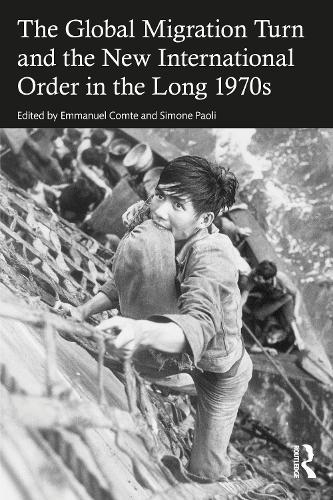
This book reveals how policies, public sentiments, and international negotiations converged to reshape migration governance in the 1970s, a pivotal decade which serves as a crucial starting point for grappling with one of the twenty-first century’s defining issues. Expansive government interventions, growing public resistance, and the first serious efforts at global migration governance left an enduring legacy. Tracing the shift from relative North–South openness to new restrictions and from East–West closure to cautious openness, the book explores how migration governance transformed in response to economic pressures, decolonisation, and Cold War geopolitics. Covering case studies from Europe, North America, Africa, Asia, and Australia, contributors analyse the emergence of migration as a political flashpoint – from legislative change and international diplomacy to grassroots activism. The book innovates by connecting diverse world regions and actors – state and non-state alike – and by reassessing the role of international organisations such as the ILO, UNHCR, and ICEM. Essential reading for academics and general readers alike, The Global Migration Turn offers a ground-breaking interpretation of the 1970s as a turning point in global migration governance. It equips readers with critical historical insight into contemporary challenges surrounding migration and international cooperation.
Full Product Details
Author: Emmanuel Comte ,
Simone Paoli
Publisher: Pallas Publications
Imprint: Pallas Publications
Weight: 0.590kg
ISBN: 9789048566334
ISBN 10: 9048566339
Pages: 218
Publication Date: 03 April 2026
Audience:
Professional and scholarly
,
Professional & Vocational
Format: Hardback
Publisher's Status: Active
Availability: Not yet available

This item is yet to be released. You can pre-order this item and we will dispatch it to you upon its release.
Reviews
This outstanding book persuasively argues that the 1970s was the defining decade in the history of migration. It dismantles the myth that the ""migration stops"" of that era ended low-skilled migration, and it shows how the international agreements and organizations that shape migration today emerged from contested interactions between the global North and global South during what the authors call the ""long 1970s."" This book is a must-read for anyone seeking to understand international migration today. Randall Hansen, author, War, Work, and Want: How the OPEC Oil Crisis Caused Mass Migration & Revolution Echoing the broader interest in the long 1970s, this volume shows how important was the decade for the history of migration governance and evolution of the international migration regime. At the intersections the North-South imbalances and the East-West détente, the expansion of the welfare state in the destination countries and efforts to reconcile their interests with those of the sending ones, there emerged tendencies still present today, and dilemmas that remain unsolved. Those seeking to understand contemporary migration-related problems and those interested in the global history of the 1970s will find this volume highly informative. Dariusz Stola, Polish Academy of Sciences
This outstanding book persuasively argues that the 1970s was the defining decade in the history of migration. It dismantles the myth that the ""migration stops"" of that era ended low-skilled migration, and it shows how the international agreements and organizations that shape migration today emerged from contested interactions between the global North and global South during what the authors call the ""long 1970s."" This book is a must-read for anyone seeking to understand international migration today. Randall Hansen, University of Toronto, author of War, Work, and Want: How the OPEC Oil Crisis Caused Mass Migration & Revolution Echoing the broader interest in the long 1970s, this volume shows how important was the decade for the history of migration governance and evolution of the international migration regime. At the intersections the North-South imbalances and the East-West détente, the expansion of the welfare state in the destination countries and efforts to reconcile their interests with those of the sending ones, there emerged tendencies still present today, and dilemmas that remain unsolved. Those seeking to understand contemporary migration-related problems and those interested in the global history of the 1970s will find this volume highly informative. Dariusz Stola, Polish Academy of Sciences This excellent, well-focused collection of essays both clarifies and advances the scholarly discussion about the political importance of immigration in Europe. These essays serve to reset the scholarly agenda and will remain important for years to come. Martin Schain, New York University, USA
This outstanding book persuasively argues that the 1970s was the defining decade in the history of migration. It dismantles the myth that the ""migration stops"" of that era ended low-skilled migration, and it shows how the international agreements and organizations that shape migration today emerged from contested interactions between the global North and global South during what the authors call the ""long 1970s."" This book is a must-read for anyone seeking to understand international migration today. Randall Hansen, Univeristy of Toronto, author of War, Work, and Want: How the OPEC Oil Crisis Caused Mass Migration & Revolution Echoing the broader interest in the long 1970s, this volume shows how important was the decade for the history of migration governance and evolution of the international migration regime. At the intersections the North-South imbalances and the East-West détente, the expansion of the welfare state in the destination countries and efforts to reconcile their interests with those of the sending ones, there emerged tendencies still present today, and dilemmas that remain unsolved. Those seeking to understand contemporary migration-related problems and those interested in the global history of the 1970s will find this volume highly informative. Dariusz Stola, Polish Academy of Sciences This excellent, well-focused collection of essays both clarifies and advances the scholarly discussion about the political importance of immigration in Europe. These essays serve to reset the scholarly agenda and will remain important for years to come. Martin Schain, New York University, USA
Author Information
Emmanuel Comte is Marie Skłodowska-Curie–ONISILOS Fellow at the University of Cyprus. Specialising in migration history and politics, he authored The History of the European Migration Regime (2018) and co-edited Discussing Pax Germanica: The Rise and Limits of German Hegemony in European Integration (2025). Simone Paoli is Associate Professor at the University of Pisa, Italy. His research focuses on mobility and migrations in Euro-Mediterranean history. He authored Frontiera Sud. L’Italia e la nascita dell’Europa di Schengen (2018) and co-edited Child Migration and Biopolitics (2021) and Peoples and Borders (2017).